
Kauali’ili’i Heiau Historic Preserve
This historic preserve in Keauhou offers a quiet, reflective encounter with ancient Hawaiian culture, featuring the restored stone platforms of Hapaiali'i and Ke'eku Heiau, sacred temples that served as a solar calendar and sites for rituals.
- Ancient Hawaiian heiau (temple) site
- Features Hapaiali'i and Ke'eku Heiau
- Offers cultural and historical insight
- Restored stone platforms to observe
Kauali’ili’i Heiau Historic Preserve is a compact but meaningful cultural stop on the south Kona side of the Big Island, in the Keauhou area just outside Kailua-Kona. It stands out because it is not a “museum” in the conventional sense: this is a sacred Hawaiian temple landscape, where restored stone platforms and shoreline setting create a quiet place to slow down, look carefully, and think about the deep history of the island. For travelers building a Kona day around beaches, coffee, or coastal driving, it adds substance without demanding much time.
A shoreline heiau with real depth
The preserve centers on Hapaiali’i Heiau and nearby Ke’eku Heiau, two ancient temple sites associated with ceremony, ritual, and community life. Hapaiali’i is especially notable for its age and for its relationship to the sun, with alignments that reflect careful observation of seasonal changes. That makes the site feel more layered than a simple stone ruin: it is a reminder that Hawaiian places were often built with spiritual, agricultural, and astronomical knowledge working together.
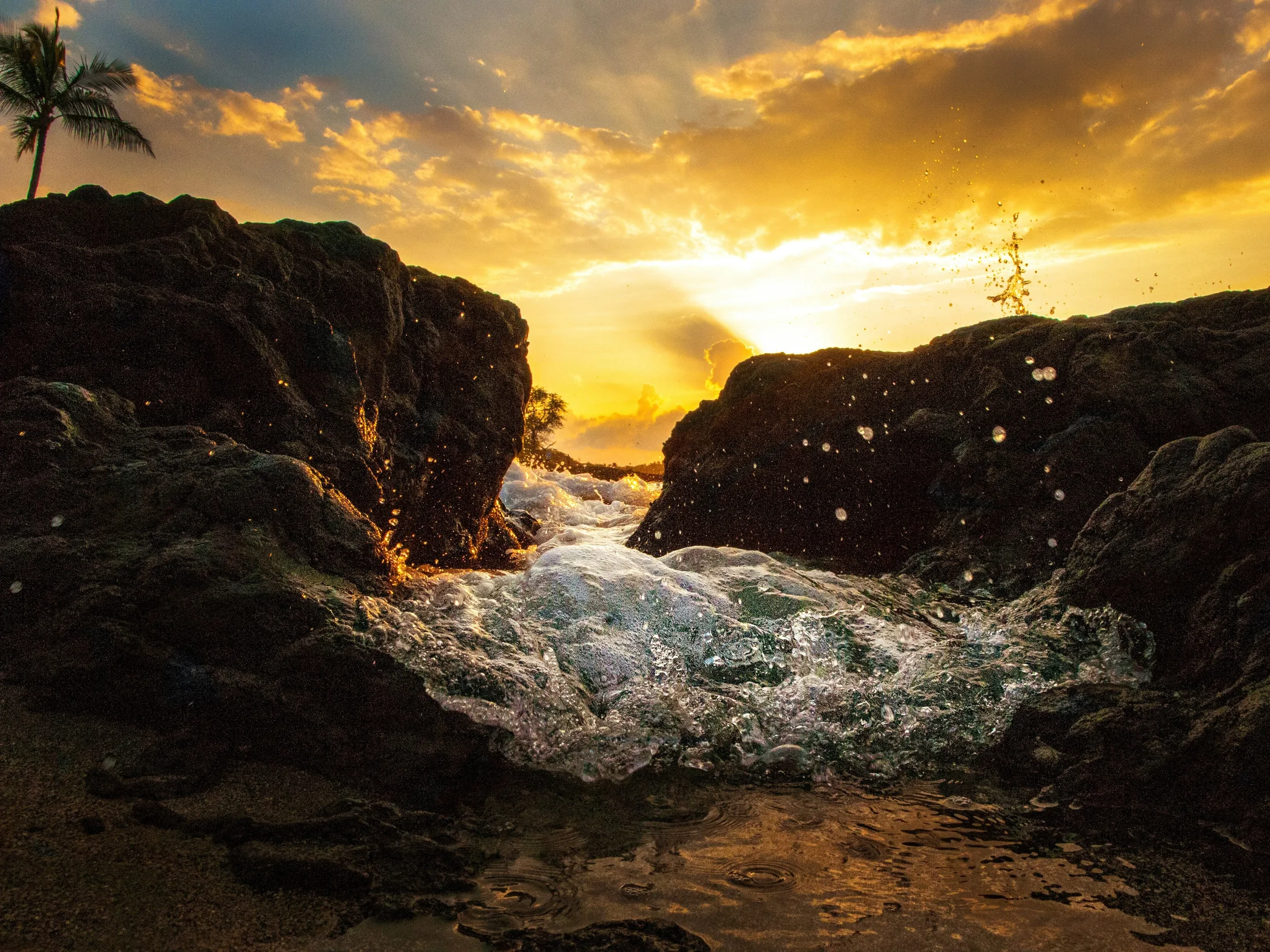
The setting reinforces that character. The heiau sit along the coast rather than behind walls or in a formal museum complex, so the experience is open, exposed, and understated. The restored platforms are the focus, and that restraint is part of the appeal. This is a place to observe, not to rush through.
How it fits into a Kona day
Kauali’ili’i Heiau Historic Preserve works best as a short cultural stop folded into a south Kona itinerary. It pairs naturally with nearby Kahalu’u Beach Park, the Keauhou shoreline, or a relaxed afternoon around Kailua-Kona. Because it does not require a long visit, reservations, or a large time commitment, it can fit between lunch and beach time, or serve as a deliberate pause before dinner in town.
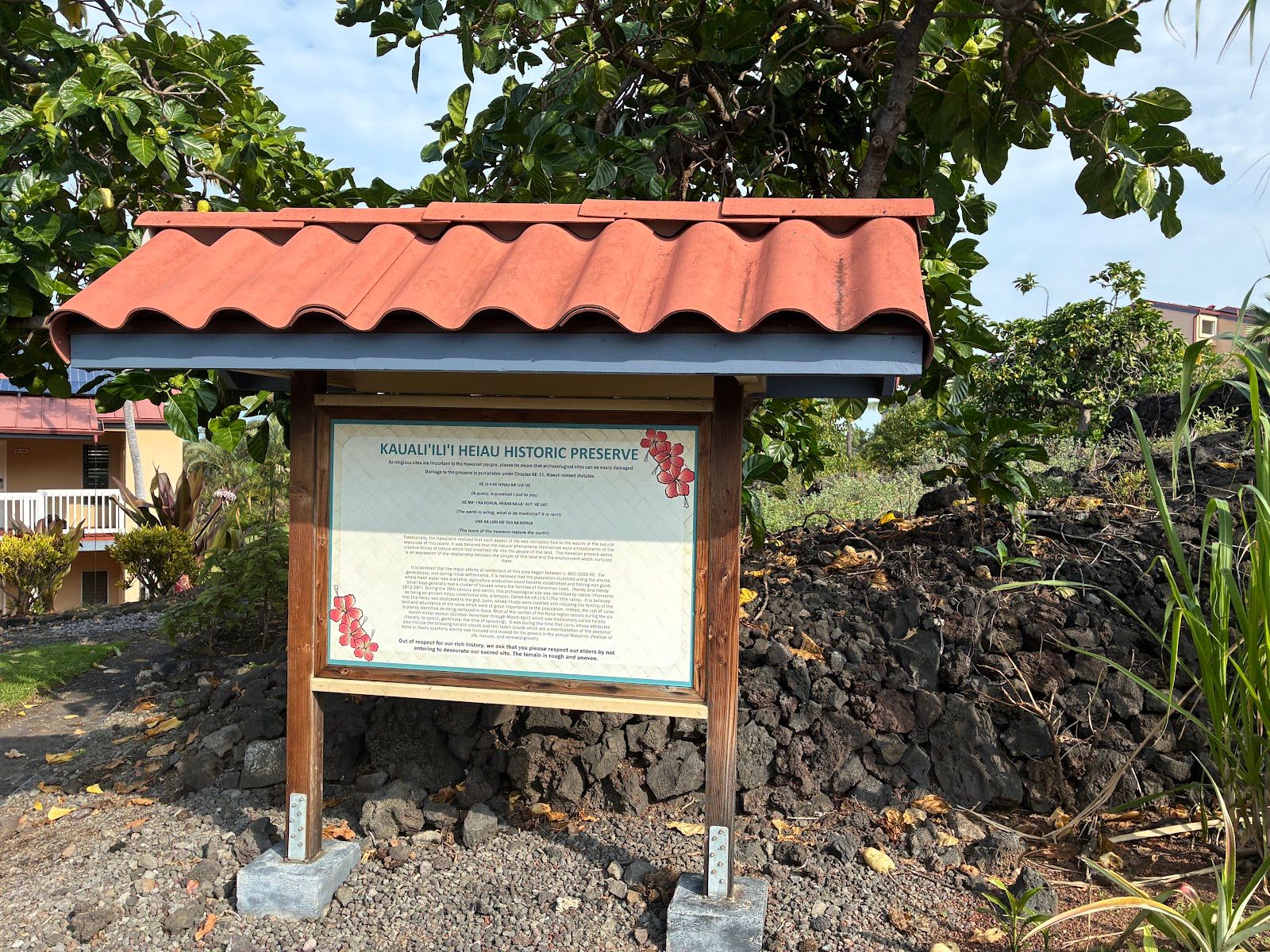
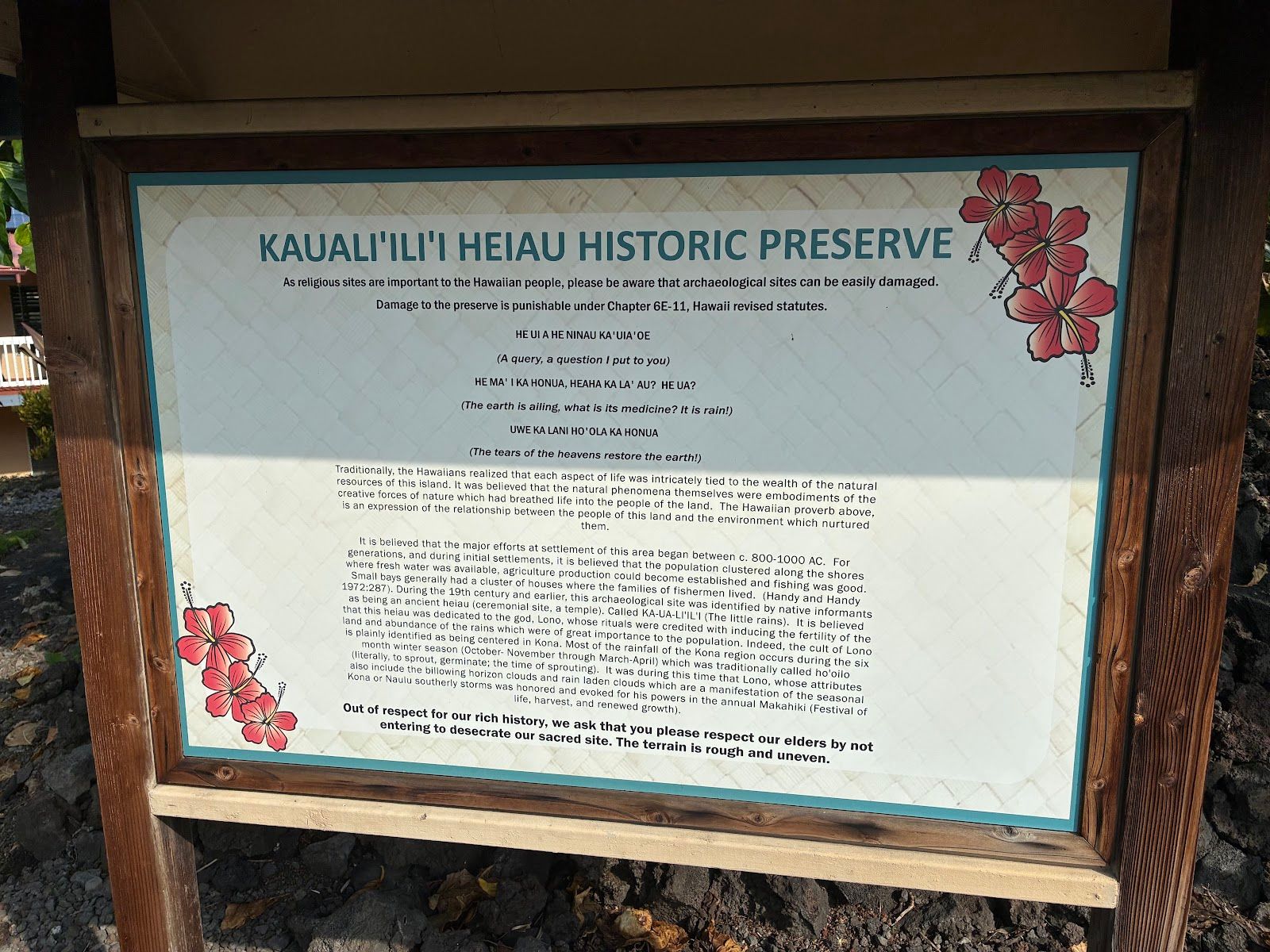
That ease of access is useful, but the tradeoff is that the site is relatively modest in terms of visitor infrastructure. There is not much in the way of formal interpretation or a full museum-style setup, so the experience depends more on context and attention than on exhibits. Travelers looking for a deeper historical outing may want to combine it with other cultural stops rather than treating it as a standalone anchor.
Respect, access, and small-site realities
This is a sacred place, and that matters more here than at many casual sightseeing stops. Visitors should stay respectful, avoid touching or moving stones, and leave the site as it is. Offerings should not be left unless they are culturally appropriate and biodegradable, and walking directly on the heiau itself is not appropriate.
The shoreline setting also deserves a bit of practical caution. The ground may be uneven, and high tide can change how the site feels and how close the water comes to the platform. Sun exposure on the Kona coast is another factor, especially during midday. For a short outdoor stop like this, comfortable footwear, water, and basic sun protection make sense.
Parking and access can be less straightforward than at a major attraction, so it is wise to allow a little flexibility and not expect a large dedicated visitor lot. The preserve is best approached as a low-key, self-guided cultural stop rather than a polished, all-services destination.
Best for travelers who want the island’s history, not just its views
Kauali’ili’i Heiau Historic Preserve suits travelers who appreciate Hawaiian history, sacred sites, and places that reward a quiet pace. It is especially good for visitors staying in Keauhou or south Kailua-Kona who want one meaningful cultural stop woven into a larger beach, dining, or coastal itinerary.
Those who prefer interpretive centers, guided programming, or a more developed historic park will likely find this site too restrained. But for travelers who value place, lineage, and the dignity of a small historic landscape, it offers one of the Kona coast’s most thoughtful short stops.