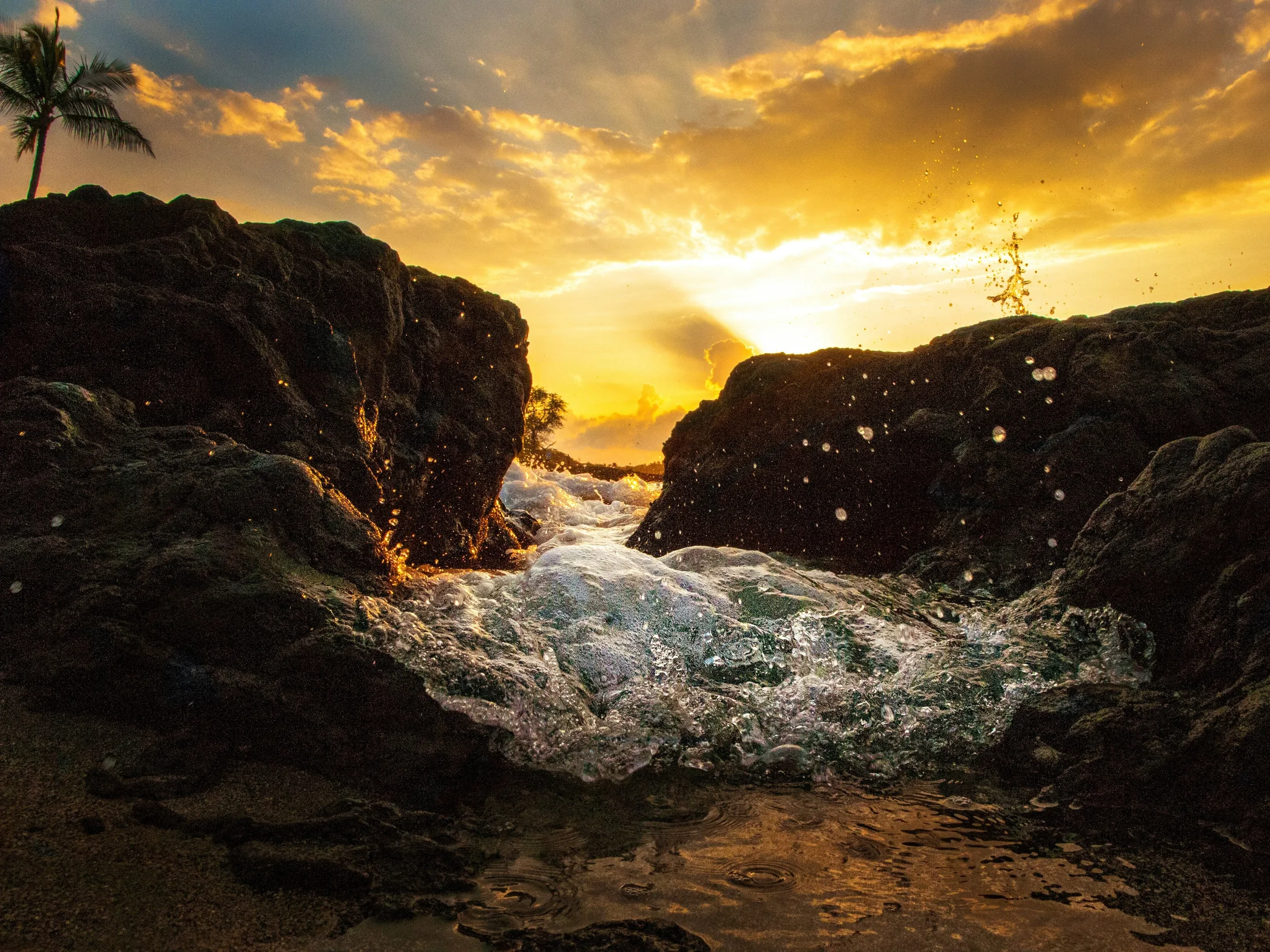


On Hawaiʻi Island, spinner dolphins are most often a leeward-coast story: calm mornings, dark lava shoreline, and a sudden line of silver bodies arcing beyond the break. You may see them from a boat, a shoreline lookout, or the rail of a Kona lanai if the ocean is kind. What you should not expect—or try to manufacture—is a close encounter.
Spinner dolphins, naiʻa in Hawaiian, are small, social marine mammals with a demanding rhythm: feeding offshore at night, then returning to calmer coastal waters by day to rest, nurse calves, and recover. That daily pattern is exactly what makes them thrilling to glimpse and easy to disturb.
The best spinner dolphin sighting on the Big Island is the one where the dolphins keep doing what they were already doing.
What makes spinner dolphins different
Spinner dolphins are the slim, long-beaked dolphins famous for leaping and rotating in the air before splashing back into the water. The spin is not just a circus trick; researchers associate aerial behaviors with communication, social energy, and coordination within the pod. Sometimes you will see a single clean leap. Other times, a whole group seems to stitch the surface together with splashes.
They are smaller than many visitors expect—roughly human-sized, not whale-sized—and have a graceful three-tone pattern: darker along the back, lighter along the sides, pale underneath. In good light, that coloring flashes beautifully against Kona’s deep blue water.
Their lives are organized around two habitats. At night, they travel offshore to feed on small fish, squid, and shrimp that rise from deeper water. By day, they often move into calmer, more protected areas where they can rest. Resting dolphins may look awake because they still surface to breathe and may continue slow movement, but they are in a lower-energy state. That is when extra noise, pursuit, or swimmers dropping into the water can matter most.
Why Kona is the classic viewing area
Hawaiʻi Island’s west side is the place most visitors associate with spinner dolphin sightings. The Kona and South Kona coast sits in the lee of Mauna Loa and Hualālai, which often means calmer morning seas than the windward side. The coastline also has deep water relatively close to shore, plus bays and nearshore areas that can offer daytime shelter.
That combination—offshore feeding grounds, protected leeward water, and a long coast with boat traffic—shapes the visitor experience. You do not need to chase dolphins to have a chance of seeing them. The better plan is to put yourself in the right general setting, slow down, and let the ocean decide.
One morning may bring spinner dolphins, manta rays everyone mentions at breakfast, and yellow tang along the reef. Another may bring only glassy water and a distant fishing boat. That variability is not a flaw in the experience; it is the experience.
Responsible viewing, in plain terms
Federal protections in Hawaiʻi prohibit approaching, swimming with, or remaining within 50 yards of Hawaiian spinner dolphins. That applies to people in the water and to vessels, including kayaks and paddlecraft. The rule exists because daytime rest is not optional for these animals.
A few practical habits cover most situations:
Watch from shore or from a respectful distance on the water. Do not swim toward dolphins, drop into the water in their path, or try to intercept them. Do not paddle, motor, or reposition repeatedly to keep up with a pod. If dolphins approach on their own, stay neutral and let them pass. Be wary of any tour language that sells wild spinner dolphins as an in-water experience.
This does not make dolphin watching less special. It changes the posture from “go get them” to “be present when they appear,” which is a better fit for Hawaiʻi anyway.
Where to look on Hawaiʻi Island
Think in coastal zones, not pin-drop “dolphin spots.” Spinner dolphins use places differently depending on conditions, season, time of day, and the pod’s own needs. Naming exact resting areas too aggressively can concentrate pressure where the dolphins are least able to absorb it.
Kailua-Kona and the leeward coast
The broad Kailua-Kona area is the island’s most practical base for many visitors hoping to see marine wildlife. Boats leave from this side, accommodations line the coast, and the ocean is often more settled in the morning than later in the day.
From shore, watch calm water for repeated splashes, dorsal fins traveling together, or birds working offshore. Do not expect a guaranteed sighting from any single viewpoint. The value of staying on the Kona side is not that dolphins appear on command; it is that you are spending time along the coast they are known to use.
South Kona
South Kona’s sheltered bays and steep coastal landscape are strongly associated with spinner dolphin habitat. This is also where restraint matters. If dolphins are resting in or near a bay, the best choice is to watch from land or maintain generous distance from a vessel. Entering the water to “share space” with resting dolphins is exactly the kind of pressure the rules are designed to prevent.
If you join a snorkel or coastal boat trip in South Kona, ask how the operator handles spinner dolphin encounters. A good answer will be calm and specific: they keep legal distance, do not place guests in the water with dolphins, and do not chase or encircle pods.
Kealakekua and Hōnaunau
These names come up often because the coastline is beautiful, historically significant, and rich with marine life. They are also places where enthusiasm can outrun judgment. If dolphins are present, treat the sighting as a bonus, not the objective. The reef, cliffs, water clarity, and sense of place are already enough reason to be there.
This is a good area to remember the difference between snorkeling near dolphins and snorkeling because of dolphins. The first may happen by chance while you follow the rules. The second easily becomes pressure.
Kohala and Hilo
The Kohala coast can produce dolphin sightings, especially from boats or shoreline vantage points with a wide view, but it is generally less central to the spinner dolphin conversation than Kona and South Kona. If you are staying at a resort on this coast, mornings are still worth watching. Long sightlines over open water can make even distant activity memorable.
Hilo’s coast has its own beauty—rain-fed, green, and textured by a different ocean mood—but it is not where most visitors base a spinner dolphin plan. If you are staying east, enjoy the island you are on that day rather than turning dolphins into a cross-island errand.
Shore versus boat
For spinner dolphins, shore viewing is underrated. A pair of binoculars and a patient morning can give you the pleasure of watching natural behavior without adding pressure to the pod. You will not get the close-up photo, but you may get something better: context. You see how far the dolphins travel, how the group changes shape, how brief the leaps are against the scale of the coast.
A boat gives you access to broader water and may improve your odds of seeing marine life in general. It also comes with responsibility. Choose tours that speak clearly about wildlife distance and do not promise dolphin swimming. On a well-run trip, a spinner dolphin sighting may be narrated, appreciated, and left alone.
Kayaks and paddleboards feel low-impact, but they can still disturb dolphins if paddlers drift into resting areas or try to follow a pod. If dolphins appear while you are paddling, stop pursuing any line toward them. Hold position when safe, give them space, and let the encounter pass.
When sightings are most likely
Mornings are often the best time to look from the Kona side, partly because the ocean may be calmer and partly because spinner dolphins commonly rest during daylight hours after feeding offshore at night. But “morning” is not an invitation to seek them in resting bays. It is simply the time when a quiet observer along the leeward coast may have a better chance of seeing activity.
Afternoons can be windier, choppier, and visually harder. Evening shifts the story offshore again as dolphins prepare for nighttime feeding. Build your day around the place itself rather than a single wildlife outcome.
Naiʻa and the meaning of the encounter
Naiʻa is the Hawaiian word commonly used for dolphins. In Hawaiian knowledge and family traditions, dolphins may carry meanings deeper than wildlife identification. For some families, certain animals are understood as ʻaumākua—ancestral guardians connected through genealogy, responsibility, and relationship.
That context is worth holding carefully. It does not mean every dolphin sighting should be turned into a spiritual souvenir, and it does not mean visitors need to perform reverence. A simpler approach is more respectful: recognize that these animals live within a cultural seascape, not just a recreational one. Give them room. Speak about them plainly. Let the encounter be enough.
What a good sighting feels like
A good spinner dolphin sighting on the Big Island might be surprisingly quiet. You are standing on black lava with coffee in hand, scanning the water because the sea is calm. At first there is only glare. Then a dorsal fin. Then another. A small group moves across the blue, and one dolphin leaps, spins, and disappears so quickly you wonder if you imagined it.
No one has to jump in. No boat has to turn hard. No pod has to be surrounded for the moment to count. That is the standard worth keeping on Hawaiʻi Island: enough wonder to stop you in your tracks, enough discipline to leave the dolphins to their day.

Further Reading
A few relevant next steps from Alakai Aloha.
 BlogWatching ʻIwa Above the Big Island Coast
Learn how to identify Hawaiʻi Island’s great frigatebird by its long wings, forked tail, effortless flight, and favorite coastal viewing conditions.
Editor's pick GuideBest Manta Ray Snorkel Tours in Kona
A guide to manta ray snorkel tours.
Editor's pick BlogWhere to Watch Koholā on Hawaiʻi Island
Plan a winter whale-watching day with the best Hawaiʻi Island seasons, shore-viewing tips, boat rules, and responsible ways to see koholā.
Editor's pick BlogWhat to Know Before a Kona Manta Snorkel
A practical, honest guide to Kona’s manta ray night snorkel—what the after-dark experience feels like, who it suits, and what to consider before booking.
Editor's pick