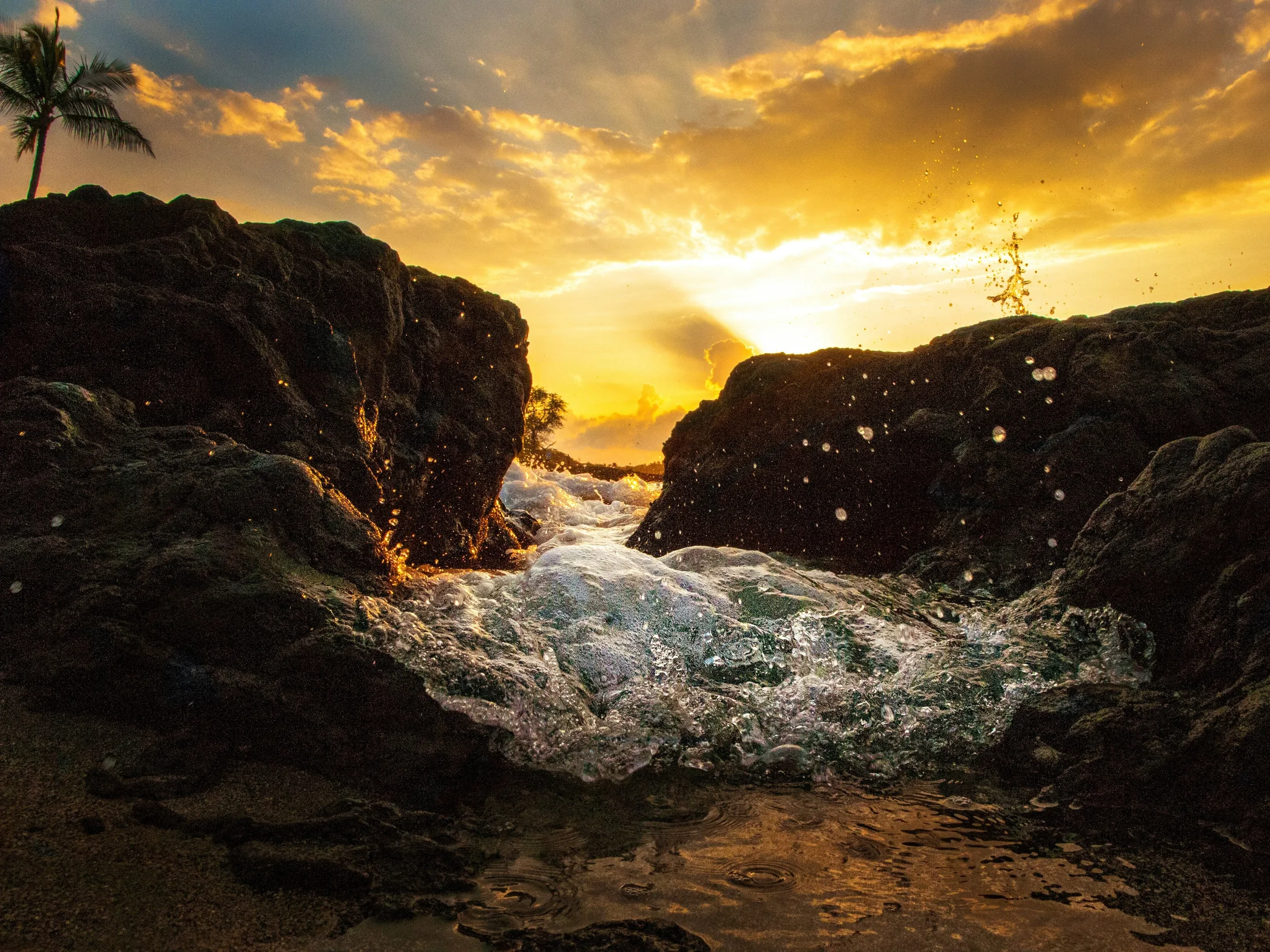


Every winter, Hawaiʻi Island gets a second shoreline.
There is the one you can drive: black lava, pale sand, resort paths, fishing cliffs, harbors, and beach parks. Then there is the moving shoreline offshore — the line of spouts, backs, flukes, and sudden whitewater that tells you koholā, humpback whales, have returned to Hawaiian waters.
For travelers, whale watching here is less about chasing one perfect overlook and more about learning how the coasts behave. The leeward Kona and Kohala sides often give you the easiest odds: wide ocean views, drier winter weather, and west-side boat tours. But koholā can appear from many parts of the island when the season is right and the sea is readable.
When humpback whales are in Hawaiʻi
Humpback whales typically begin appearing in Hawaiian waters in late fall, with the most reliable viewing from January through March. Some may still be around in April, but if whales are central to your trip, midwinter is the better bet.
They come to Hawaiʻi to mate, give birth, nurse calves, and rest in warm water. They are not here for the restaurants; humpbacks do most of their feeding in colder northern waters and live largely off stored energy while in Hawaiʻi. That is part of what makes winter sightings feel so charged. A breach is not a zoo performance. A mother and calf moving slowly offshore are part of a migration that spans thousands of miles.
Mornings are often easier, especially along the Kona and Kohala coasts, before afternoon winds texture the water. You do not need perfectly flat seas, but you do need patience. Good shore watching is rarely constant action. It is ten minutes of scanning, one small puff on the horizon, then suddenly the ocean has your full attention.
How to spot whales from shore
The first sign is usually the blow — a vertical burst of mist that hangs briefly above the water. Once you see one, keep watching that area. A whale may surface several times before diving. If it dives deeply, you may see the tail flukes rise and slip down like a closing door.
Breaches are easier to notice but harder to predict. One moment the ocean is empty; the next, a forty-ton animal has thrown itself into the air and landed in a sheet of whitewater. Tail slaps and pectoral fin slaps often appear from shore as repeated splashes in one place.
Bring binoculars if you have them. They change the experience completely. Without them, you are watching events. With them, you can begin to read behavior: a calf surfacing beside a larger adult, a fluke pattern, the difference between wind chop and whale activity.
The best Hawaiʻi Island areas for whale watching
Hawaiʻi Island is large enough that “where to see whales” depends on where you are staying and how much driving you want to do. These areas make the most practical sense for visitors.
Kohala Coast
The Kohala Coast is one of the island’s most convenient whale-watching regions. The shoreline has long views over open water, winter weather is often drier than on the east side, and many visitors are already staying around Waikōloa, Mauna Lani, Hāpuna, or Kawaihae.
You do not need a formal overlook to have a good whale morning here. Coastal paths, beach parks, and lava points with a clean view of the channel can all work. Hāpuna Beach and the coastline around the Kohala resorts are especially pleasant because you can combine whale scanning with an ordinary beach day. Sit high enough to see over nearshore glare, keep binoculars handy, and watch for blows beyond the swimmers and reef line.
Kawaihae is also useful as a west-side harbor area. Some whale-watching and ocean tours operate from this side of the island, and the surrounding coastline gives wide views toward the waters between Hawaiʻi Island and Maui Nui.
Kailua-Kona and the central Kona coast
Kailua-Kona is not just a base for manta ray trips and coffee country drives. In whale season, the oceanfront through town and the broader Kona coast can produce memorable sightings, sometimes while you are doing nothing more ambitious than walking after breakfast.
The practical advantage here is comfort. You can watch from seawalls, oceanfront restaurants, hotel grounds, and shoreline pullouts without turning the morning into an expedition. The sea is often calmer here than on windward coasts, especially earlier in the day, which makes spouts easier to pick out.
Boat-based whale watching is also common from the Kona side. If you choose a tour, look for operators who speak clearly about approach rules and let whales set the terms of the encounter. A good whale watch is not measured by how close the boat gets. Often the best moments happen when the captain cuts the engine, everyone quiets down, and whales surface on their own line.
Kealakekua and South Kona
South Kona’s coastline can be excellent for watching the water, though it is less plug-and-play than the resort coast. The terrain is steeper in places, access can be more limited, and many visitors come here for snorkeling, coffee farms, or historic sites rather than dedicated whale watching.
That said, the elevated roads and coastal viewpoints of South Kona can give you a wider perspective than sea level. If you are already spending a day in the area, keep your whale eyes on. A spout seen from higher ground is often easier to track, and the contrast of deep blue water against the lava coast makes surface activity stand out.
Hilo and the windward side
The Hilo side can see koholā too, but it is not usually the simplest choice for a visitor building a winter itinerary around sightings. The windward coast gets more rain, more cloud, and often rougher-looking water, which can make scanning harder. That does not mean whales are absent. It means your visibility and comfort may be less predictable.
If you are staying in Hilo, look for clear mornings and broad coastal views. Treat whales as a bonus while you explore the east side rather than the only reason for the outing. The island is too interesting to spend a whole day staring into gray chop and feeling like you failed.
Shore or boat: which is better?
Shore watching is underrated on Hawaiʻi Island. It is quiet, inexpensive, and easy to fold into a day that includes the beach, a coastal walk, or a slow breakfast. It also gives you a sense of scale. Seeing a whale’s blow far offshore reminds you how much life is moving through the channel beyond the resort umbrellas.
A boat tour gives you a different kind of experience. You are closer to the surface of the water, you can hear blows more clearly if whales surface nearby, and a naturalist or experienced captain may help interpret behavior you would miss on your own. Boats also have the advantage of mobility, though they are still bound by rules and sea conditions.
If anyone in your group gets seasick, choose carefully. Winter is whale season, but it can also bring swell. A larger, steadier vessel may be more comfortable than a smaller craft. Families with young children may be happier with a short shore-based plan first: binoculars, snacks, shade, and a beach where waiting is enjoyable.
The basic whale-watching rules
Humpback whales in Hawaiʻi are protected, and the simple version is easy to remember: do not approach them. Federal rules in Hawaiʻi set minimum distances for vessels and people in the water, and aircraft and drones have their own restrictions. If a whale comes toward you while you are boating, paddling, or swimming, stop, give it room, and let it pass. Never try to swim with, touch, chase, surround, or cut across the path of a whale.
For travelers, the most useful habit is choosing people who take this seriously without making it grim. A responsible captain will not promise a close encounter. Whales are large enough, loud enough, and strange enough that they do not need to be crowded to be unforgettable.
A few ways to make the day better
Whale watching rewards the unhurried traveler. Give yourself a stretch of time rather than a five-minute glance between reservations. Look with the sun at your back when possible. Scan the horizon slowly, then return to any area where you saw a blow. If other people are gathered and pointing, do not be shy about asking what they saw; winter shoreline strangers become friendly fast when whales are involved.
Do not overlook sound. From a boat, a nearby exhale can be startling — a deep, wet rush of air that feels older than the engine, older than the harbor, older than your vacation plans. From shore, you may not hear much, but you will notice the mood change when someone spots a breach. Everyone turns outward. Conversations pause. For a moment, the island feels bigger.
Why Hawaiʻi Island is a good whale-watching island
Maui often gets the loudest reputation for humpbacks, but Hawaiʻi Island has its own winter rhythm. The island is younger, darker, broader. You might watch koholā from a manicured resort path in Kohala one morning and from a rough lava shoreline the next. You might see a calf rolling beside its mother offshore, then turn around and see Mauna Kea holding snow or cloud above the dry coast.
That contrast is part of the pleasure. Hawaiʻi Island does not make whale watching feel separate from the rest of the place. It folds it into the day: coffee, lava, beach, harbor, long drive, sudden spout.
Come in the right season, keep your expectations loose, and give the ocean time to reveal itself. The whales are not on a schedule for us. That is exactly why seeing them feels like luck, even when you planned well.

Further Reading
A few relevant next steps from Alakai Aloha.
 BlogWatching ʻIwa Above the Big Island Coast
Learn how to identify Hawaiʻi Island’s great frigatebird by its long wings, forked tail, effortless flight, and favorite coastal viewing conditions.
Editor's pick GuideBest Tours & Things to Do on Hawaiʻi Island
A guide to best Big Island tours.
Editor's pick ActivityHapuna Beach
Hapuna Beach offers nearly a half mile of pristine white sand and clear waters on the Big Island's Kohala Coast, perfect for swimming, bodyboarding, and sunbathing with excellent family-friendly amenities.
Editor's pick BlogHow to See Spinner Dolphins on the Big Island
A Big Island guide to spotting naiʻa responsibly, from Kona’s leeward waters to the viewing habits that help resting dolphins stay undisturbed.
Editor's pick