

Honu change the tempo of a beach day.
One minute you are looking at the water the way travelers usually do—color, clarity, waves, where to put the towel. Then a dark, rounded shell lifts in the shallows, or a turtle is suddenly there on the sand, still as a stone except for the slow movement of breath. The whole scene gets quieter.
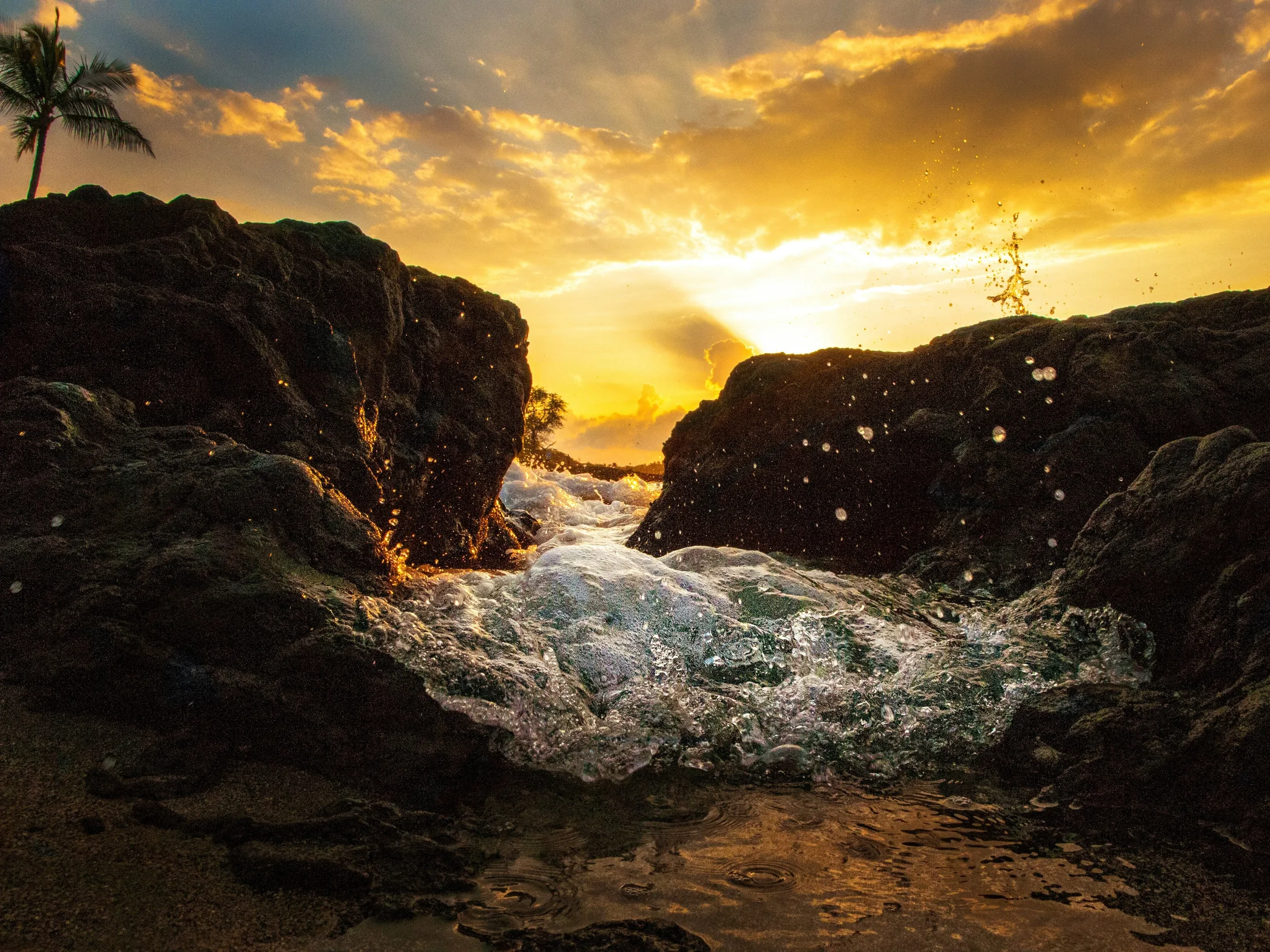
On Hawaiʻi Island, that moment can happen in very different settings: a black-sand beach in Kaʻū, a Kona snorkeling cove, a lava-edged shoreline north of Kailua-Kona, a calm patch of reef along the Kohala Coast. The island is large, young, and volcanic, and its honu habitat often feels that way—dark rock, clear water, low coastal vegetation, and reef shelves where turtles graze.
This guide is for the traveler who hopes to see honu on the Big Island and wants to do it well: what species you may encounter, why they matter here, where sightings are more likely, and how to enjoy the moment without turning it into a scene.
The honu you’re most likely to see
The turtle most visitors mean when they say “honu” is the Hawaiian green sea turtle, *Chelonia mydas*. Around Hawaiʻi Island, these are the turtles you may see resting on shore, surfacing near reefs, or moving slowly through shallow water.
Despite the name, green sea turtles are not bright green on the outside. Their shells are usually olive, brown, charcoal, or mottled with lighter markings. The “green” refers to the color of their body fat, influenced by a diet that, as adults, is largely plant-based. In Hawaiʻi, they graze on limu, the seaweeds that grow over rocks and reef.
Green sea turtles can grow large—big enough that a basking adult looks almost prehistoric against black sand. They are air-breathing reptiles, so even when they spend long stretches underwater, they return to the surface. That little lift of the head, the calm inhale, the slide back down: once you know to watch for it, you start seeing the ocean differently.
Hawaiʻi is also home to the hawksbill sea turtle, known in Hawaiian as honuʻea. Hawksbills are much rarer. They tend to be smaller than green turtles, with a sharper, beak-like mouth and a more patterned shell edge. They are critically endangered, and sightings are uncommon for casual beachgoers. If you do happen to see one, treat it as a quiet privilege.
Why honu matter in Hawaiʻi
For many visitors, sea turtles are first encountered as wildlife. In Hawaiʻi, they also carry cultural, family, and ecological meaning.
Honu are sometimes understood as ʻaumākua—ancestral or family guardians—in particular Hawaiian family traditions. That does not mean every Hawaiian person relates to honu in the same way, or that visitors should casually claim the relationship as their own. It does mean that honu are not just “cute turtles” here. They belong to a living place, with living stories and responsibilities around them.
Ecologically, honu are part of the reef’s daily maintenance. Green turtles graze limu, helping keep algae growth in balance. Hawksbills, where present, feed on sponges and other reef organisms. None of this is dramatic in the way a breaching whale is dramatic. It is slower, more ordinary, and more essential: bite by bite, day by day.
Their conservation story is also part of modern Hawaiʻi. Sea turtles were once heavily harvested, and legal protections that began in the 1970s helped green turtle populations recover significantly in the islands. That recovery is one reason visitors now have a real chance of seeing honu from shore.
Where honu are commonly encountered on Hawaiʻi Island
No beach can promise a turtle. Honu are wild animals, not scheduled attractions. But certain kinds of shoreline give you better odds: calm reef areas, lava rock with limu, protected coves, and beaches where turtles are known to haul out and rest.
Punaluʻu Black Sand Beach
Punaluʻu, in Kaʻū, is one of Hawaiʻi Island’s best-known turtle-viewing places. The contrast is memorable: honu resting on dark sand, coconut palms behind them, surf moving across the bay.
The key at Punaluʻu is to let the turtles rest. If a turtle is on the beach, stay back and watch from a distance. Do not walk up for a close portrait, place children beside it, touch its shell, or try to move around it for a better angle.
Punaluʻu is also a beach with changing ocean conditions, so it is often better as a turtle-viewing stop than a casual swim stop unless conditions are clearly calm and appropriate.
Kahaluʻu Beach Park
Kahaluʻu, south of Kailua-Kona, is one of the island’s familiar nearshore snorkel areas, and honu are sometimes seen in the shallows. This is a place where turtle encounters can happen quickly: you are floating over the reef, looking at fish, and suddenly a turtle is feeding nearby or passing through.
In the water, give the turtle room to choose its path. Do not follow it, hover directly above it, block its access to the surface, or reach out as it passes. If a turtle swims toward you, stay calm and still, then let it move away. The best underwater turtle encounters feel unforced.
Because Kahaluʻu is popular, a turtle does not need a ring of snorkelers around it. If several people are already watching, enjoy a brief look and then drift on.
Kaloko-Honokōhau and the Kona coast
The coastline around Kaloko-Honokōhau National Historical Park and nearby Kona shorelines includes lava rock, tide pools, fishponds, and reef habitat where honu may be seen resting or feeding. This part of the island rewards slow looking. Walk the coast, scan the edges of the water, and watch for shapes that at first look like rounded lava stones.
In places with cultural sites, fishponds, and protected coastal resources, the experience is bigger than turtle-spotting. Move thoughtfully, stay on appropriate paths, and let the shoreline set the pace.
Kohala and resort-side beaches
Along the Kohala Coast, honu may appear around rocky points, reef edges, and protected swimming areas, especially where limu grows on submerged lava. Visitors sometimes see turtles while snorkeling, walking the beach, or watching the water from shore.
These sightings can feel delightfully casual: a head breaking the surface near a reef, a shell visible in clear water, a slow-moving shape over pale sand. They are also easy to miss if you are rushing. Honu viewing is often less about going to the “right” spot than arriving with enough patience to notice what is already happening.
What good viewing looks like
Honu in Hawaiʻi are protected under federal and state law. In plain terms: do not touch, harass, chase, feed, ride, surround, trap, or disturb sea turtles on land or in the water. These protections apply whether the turtle is resting on a beach, feeding on the reef, or swimming past your snorkel mask.
Wildlife agencies commonly recommend keeping at least 10 feet of space from sea turtles. Think of that as a minimum, not a challenge. If your presence causes the turtle to lift its head repeatedly, change direction, stop feeding, or try to get away, you are too close.
Good honu viewing is not complicated:
Stay back from turtles resting on sand or rock. In the water, let turtles pass freely and surface easily. Do not touch shells, flippers, or heads. Do not feed turtles or try to attract them. Keep cameras and phones from becoming the reason you crowd the animal. If a volunteer, ranger, or posted sign gives guidance, follow it.
That is the whole thing. No big performance of virtue required. Just enough space for a wild animal to remain wild.
The photo is better when you back up
There is a funny thing about honu photos: the close-up is usually not the best image.
A turtle’s face fills the frame, and the picture could be from anywhere. Step back, and suddenly the whole island enters the photograph: black sand, blue water, pāhoehoe lava, a child watching quietly from a respectful distance, the low line of the coast. The image has context. It feels like Hawaiʻi Island, not just “a turtle.”
The same is true underwater. A turtle wedged into the center of a GoPro frame can feel invasive. A turtle moving through reef and light, with space around it, carries the grace of the encounter.
When to look
Honu can be seen at different times of day, and there is no perfect visitor formula. Calm ocean conditions help with visibility. Low-traffic moments can make beach viewing more pleasant. Basking turtles may be present when they are present; they do not keep resort hours.
The better habit is to build turtle awareness into days you already want to have. If you are visiting a black-sand beach, scan the resting areas before walking across them. If you are snorkeling a Kona reef, look slowly along the edges where rock meets sand. If you are walking a lava shoreline, pause now and then to watch the water for a surfacing head.
Some of the best sightings happen when you are not trying too hard.
A final word on luck
Seeing honu on Hawaiʻi Island is common enough that it feels possible, but not so guaranteed that it should become an expectation. That balance is part of the pleasure. You go to the coast, you pay attention, and the island either offers the moment or it does not.
If it does, take it gently. Watch the slow breath. Notice the shell pattern, the small dark eye, the way a heavy animal becomes effortless in water. Give it space. Let the scene stay quiet.
A honu sighting does not need much added to it. On Hawaiʻi Island, with lava underfoot and reef just offshore, the turtle already knows what it is doing. Your job is simply to be a good witness.

Further Reading
A few relevant next steps from Alakai Aloha.
 BlogA Gentle Guide to Hawaiʻi Island Nēnē
Where to look for Hawaiʻi’s state bird on the Big Island, plus how to watch nēnē without crowding, feeding, or changing their behavior.
Editor's pick ActivityKaloko-Honokōhau National Historical Park
Explore Kaloko-Honokōhau National Historical Park to discover ancient Hawaiian culture, archaeological sites, and abundant wildlife, including green sea turtles, along the scenic Kona coast.
Editor's pick ActivityKahalu’u Beach Park
This popular Kailua-Kona beach park is ideal for families and first-time snorkelers, offering calm, protected waters teeming with tropical fish and sea turtles, plus amenities for a full day of fun.
Editor's pick BlogWatching ʻIwa Above the Big Island Coast
Learn how to identify Hawaiʻi Island’s great frigatebird by its long wings, forked tail, effortless flight, and favorite coastal viewing conditions.
Editor's pick