

Hawaiʻi Island asks a little more of a multi-generational family than the resort postcards admit. It is large. The best days are not always close together. The weather can feel like three different trips in one. And that is exactly why it can work so well for toddlers, teens, parents, and grandparents—if you plan with the island’s scale in mind.
This is not the island for packing every day from breakfast to sunset. It is the island for choosing a good base, letting some people opt out without derailing the day, and building a trip around variety: beach mornings, easy scenic drives, a cool evening near the volcano, malasadas or poke on the lanai, and enough downtime that no one has to perform “vacation happiness” on command.
Start with the real decision: one base or two
For a multi-generational trip, the biggest Hawaiʻi Island planning choice is whether to stay in one region or split the trip between west and east.
Most families default to the Kona or Kohala side because it is sunnier, drier, and easier for beach-and-pool days. If your group includes toddlers, grandparents who prefer routine, or anyone who wants a resort-style vacation, this is usually the simplest choice. Kona gives you town access, restaurants, boat tours, and a more lived-in feel. The Kohala Coast and Waikoloa area tend to be more resort-oriented, with bigger properties, pools, lawns, beach paths, and easier parking.
The tradeoff is distance. Hawaiʻi Volcanoes National Park, Hilo, waterfalls, rainforest, and the lush eastern side become long day trips from the west. They are possible for many families, but “possible” and “pleasant with a tired four-year-old and two grandparents in the back seat” are different categories.
A split stay can make the island feel less like a series of drives and more like two vacations: west side first for beaches and arrival recovery, then Volcano or Hilo for a cooler, greener stretch. The downside is packing up, changing groceries, and managing everyone’s room preferences twice.
A good rule: if Hawaiʻi Volcanoes National Park is central to why you chose the island, consider two regions. If the park is a “we’d love to see it if everyone’s up for it” outing, stay west and keep the day flexible.
Choose lodging for the people who nap, wake early, or need quiet
Multi-generational lodging is less about luxury than layout. The best setup is the one that prevents small annoyances from becoming family folklore.
A condo or villa with a kitchen and laundry can be a gift on Hawaiʻi Island. Toddlers eat at odd times. Teens return from the beach starving. Grandparents may want coffee before everyone else wakes up. Parents need a place to rinse swimsuits and make a basic breakfast without turning every morning into a restaurant negotiation.
Hotels and resorts can be easier when the group values pools, on-site dining, elevators, and less household management. They also help when not everyone wants to do the same thing. One branch of the family can go to the beach while another sits by the pool or rests without anyone needing to drive.
Before you book, think less about the prettiest photos and more about the daily mechanics:
Are there stairs, steep paths, or long walks from parking to the room? Can grandparents get shade and a comfortable seat near the pool or beach? Is there a separate sleeping space for the toddler who goes down early? Can early risers make coffee without waking everyone? Is the drive to dinner easy, or will every meal require a production?
On Hawaiʻi Island, these questions matter because you may already be spending more time in the car than you would on a smaller island. Make the home base easy.
Build days around one main event
The most common multi-generational mistake here is trying to “use” the island efficiently. Hawaiʻi Island does not reward that. A beach morning, scenic lunch, historic site, waterfall, and sunset dinner may look reasonable until you add car seats, bathroom stops, parking, sun, and the one person who suddenly needs a nap.
Plan one main event per day. Everything else is a bonus.
A west-side day might be: easy breakfast, beach or pool in the morning, rest during the hottest part of the day, then an early dinner. If the group still has energy, take a sunset walk or get shave ice. That is a full day.
A volcano day might be: leave with layers and snacks, stop for a proper lunch, visit a few accessible overlooks or short walks, and give yourself permission to skip anything that requires the whole group to rally. The park is not a checklist. It is more memorable when people are comfortable enough to actually look around.
For teens and active adults, this pace can feel too slow on paper. In practice, it helps. If the day has one shared anchor, smaller groups can add their own adventures: a snorkel session, coffee farm visit, longer walk, gym hour, bookstore stop in Hilo, or uninterrupted nap.
Beach days: pick comfort over drama
For a family with mixed ages, the best beach is not always the most photogenic one. It is the one with manageable access, shade or shade nearby, bathrooms if your group needs them, and conditions that match the least confident swimmer.
On the Kona side, Kahaluʻu Beach Park is often discussed for snorkeling and near-shore marine life, though it can be busy and conditions vary. ʻAnaehoʻomalu Bay in Waikoloa can be useful when the ocean is settled, with a broad setting for people who want to walk, sit, or wade rather than commit to a full swim. Spencer Beach Park, farther north, is another beach families often consider for gentler water and a more local-park feel. Hāpuna is beautiful and spacious, but it can have stronger shorebreak at times, so approach it as a beach day that depends on conditions rather than an automatic swimming choice.
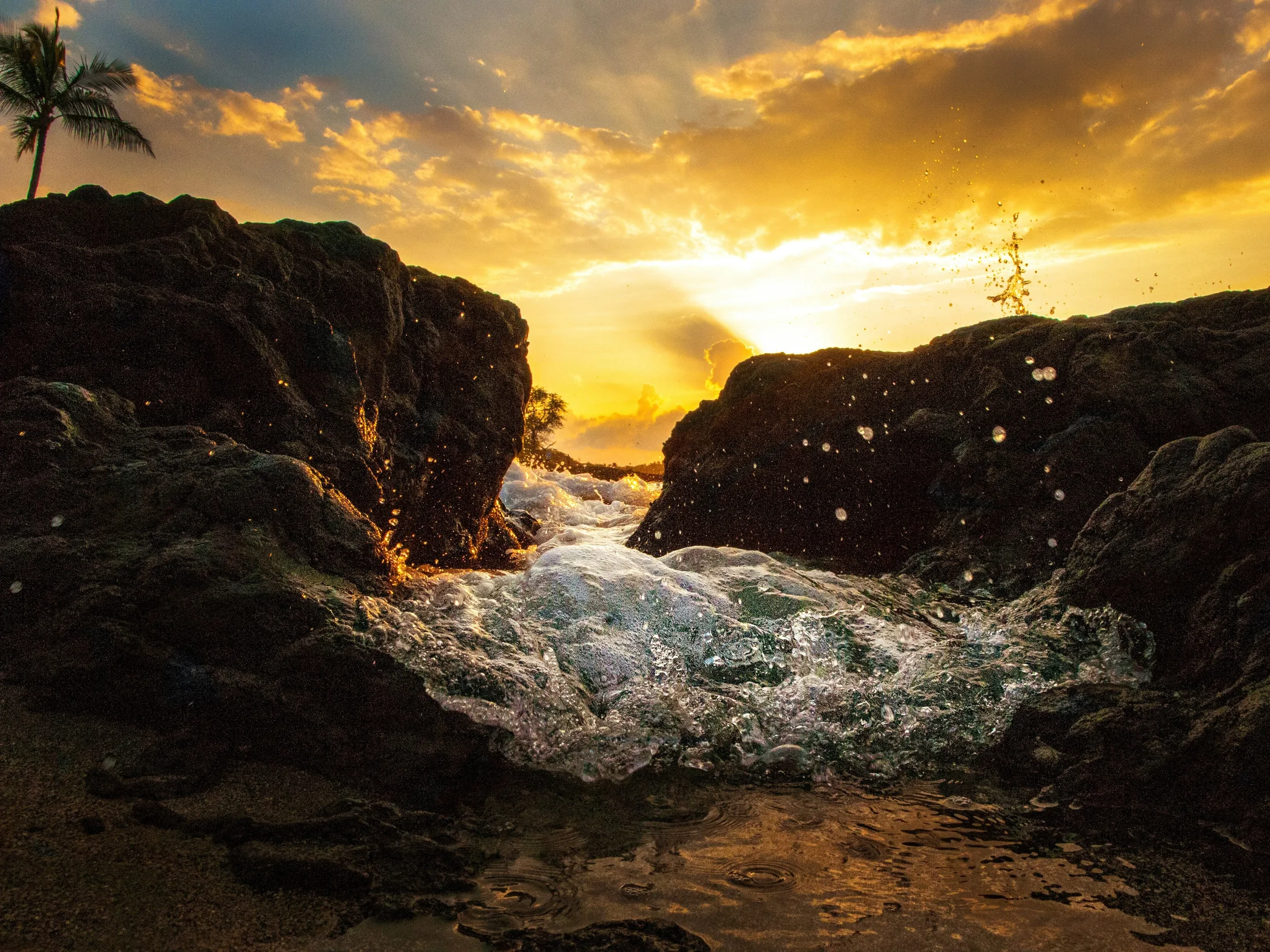
On the Hilo side, the coast feels different: darker lava rock, tide pools, palms, rain showers passing through. Richardson Ocean Park is one of the better-known east-side places for a family ocean stop, especially for those who want to see the Hilo side without pretending it is the Kohala Coast.
Keep the beach plan simple: go earlier, bring more snacks than seems reasonable, and do not make the whole group stay just because parking was hard. If the water does not look right for your group, the beach can still be a place to sit, watch, and let kids dig in the sand.
Volcano planning for toddlers and grandparents
Hawaiʻi Volcanoes National Park is one of the great reasons to choose this island for a family trip. It is also where good pacing matters most.
The park sits at elevation, and it can be cool, misty, windy, or rainy even when the west side is hot and dry. Bring actual layers for the people who get cold easily. Comfortable walking shoes help, even if you are mostly doing overlooks and short paths.
A comfort-first volcano day usually works better than a strenuous one. Start with the visitor center area, choose a few viewpoints, and keep drives and walks short enough that grandparents and toddlers are not negotiating with the itinerary. Steam vents, crater views, and scenic pullouts can give the family a strong sense of the landscape without requiring everyone to hike for miles. If a lava tube or particular trail is open and your group is mobile enough, it can be a memorable add-on, but it does not need to carry the day.
If you are staying in Volcano or Hilo, the park becomes much easier. You can go for a shorter visit, return to rest, and come back later if the group wants another look.
Don’t underestimate the drives
Hawaiʻi Island is called the Big Island for a reason, but visitors still underestimate it. Drives can be gorgeous—lava fields, pastureland, ocean views, rainforest, open sky—but they are not background noise when you have three generations in one vehicle.
Choose a car setup that matches reality, not optimism. If the group needs two vehicles, two vehicles may save the trip. One car can return early with a toddler or grandparent while the other keeps exploring.
Avoid stacking long drives on consecutive days. A volcano day followed by a Waipiʻo-area viewpoint day followed by a South Point adventure is too much for many families, especially from one lodging base. Leave space between bigger outings.
And be honest about arrival day. By the time everyone lands, gets bags, finds the rental car, installs car seats, and buys groceries, the achievement is getting fed and settled. That is not a wasted day. That is how the rest of the trip starts well.
Food: make dinner less important
Restaurants can be one of the joys of Hawaiʻi Island, but multi-generational groups often do better when dinner is not the emotional centerpiece every night.
Plan a few proper meals out, especially in Kona, Hilo, Waimea, or resort areas where your group has options. But let many meals be easy: farmers market fruit, bakery stops, poke bowls, plate lunches, groceries on the lanai, leftovers after the pool. This gives picky eaters, early bedtimes, and tired adults room to breathe.
Breakfast at home is especially useful. It keeps the morning from starting with eight opinions and a waitlist. Lunch can be casual and flexible. Then, when you do choose dinner out, go early enough that the toddler is still charming and the grandparents are not fading.
A sample rhythm for a 7-day Hawaiʻi Island family trip
Day 1: Arrive and settle in Pick up groceries, unpack, swim if it is easy, and keep dinner simple.
Day 2: West-side beach and pool day Choose a comfortable beach in the morning, rest after lunch, then take a sunset walk or early dinner.
Day 3: Kona day Keep it local: coffee country, a historic site, a snorkel-friendly beach if conditions suit, or time in town. Split up if teens or adults want something more active.
Day 4: Slow day or optional activity This is the buffer day that saves the trip. Boat tour, farmers market, beach repeat, or absolutely nothing ambitious.
Day 5: Move east or do the volcano day If splitting the trip, relocate to Volcano or Hilo and keep the day light. If staying west, make this the carefully planned park day with layers, snacks, and a modest route.
Day 6: Hilo, rainforest, or more park time For split-stay families, enjoy the east side without rushing: gardens, waterfalls, Hilo town, or another short visit to the park.
Day 7: Return west or final easy day Do not end with the longest drive if you can avoid it. Give the family a soft landing before departure.
Leave room for different vacations
The secret is not finding one perfect plan that makes everyone equally thrilled all day. That plan does not exist. The better goal is to design a trip where different people can have slightly different vacations without making anyone feel left behind.
Grandparents may want shade, scenery, and time with the kids without being dragged through every activity. Parents may want one dinner where they are not cutting someone’s food. Toddlers need routine and sand. Teens need a little independence and at least one thing that feels like theirs. Hawaiʻi Island can hold all of that, but only if the schedule has enough space.
Let the island be big. Let the days be uneven. Let some people stay back by the pool while others go look at lava rock or waterfalls. The family memories usually come from the in-between moments anyway: a grandparent teaching a child to spot fish from shore, cousins eating shave ice in the back seat, three generations standing quietly at the edge of a crater, everyone a little cold and very glad they brought jackets.

Further Reading
A few relevant next steps from Alakai Aloha.
 BlogA Low-Stress Hawaiʻi Island Trip With Teens
Plan a teen-friendly Hawaiʻi Island trip with volcano days, manta rays, beach breaks, food stops, and smart bases that keep big distances manageable.
Editor's pick GuideBest Beaches on the Big Island
A guide to best Big Island beaches.
Editor's pick ActivityHawaiʻi Volcanoes National Park
Hawaiʻi Volcanoes National Park is a UNESCO World Heritage Site offering unparalleled opportunities to explore active volcanic landscapes, diverse ecosystems, and ancient Hawaiian culture, providing a profound connection to Earth's powerful forces.
Editor's pick ActivityKahalu’u Beach Park
This popular Kailua-Kona beach park is ideal for families and first-time snorkelers, offering calm, protected waters teeming with tropical fish and sea turtles, plus amenities for a full day of fun.
Editor's pick