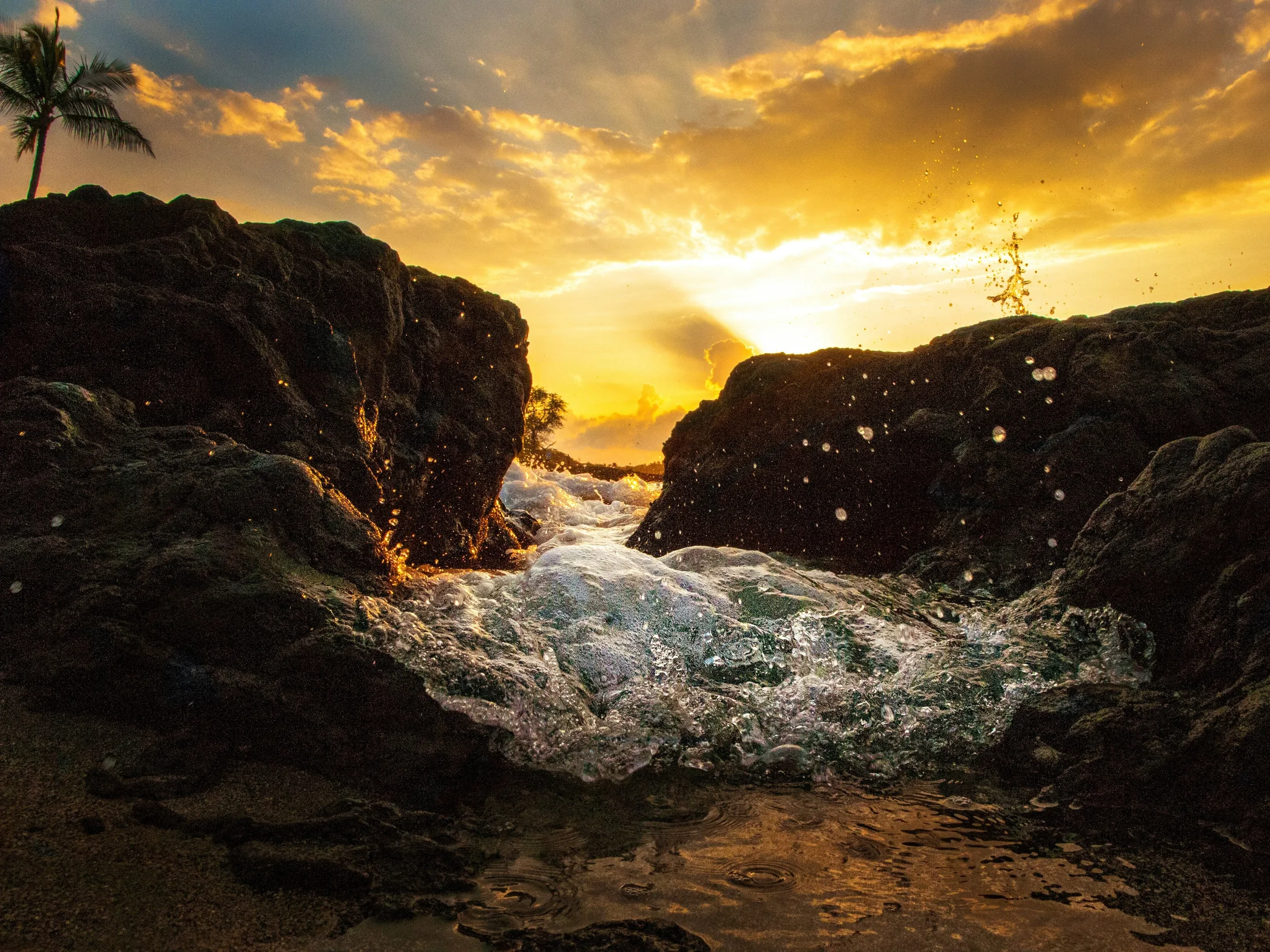


Puʻuhonua o Hōnaunau is one of those Hawaiʻi Island places where the usual vacation rhythm changes. The coast is bright and gorgeous; the palms move in the wind; the water is the kind of blue that makes people reach for a camera before they understand what they are looking at. But the feeling is different here. Quieter. More deliberate.
This is not just a scenic stop south of Kailua-Kona. Puʻuhonua o Hōnaunau National Historical Park preserves a place of deep cultural and spiritual importance: a puʻuhonua, often translated as a place of refuge, beside former royal grounds associated with chiefly life in old Hawaiʻi. It is one of the most meaningful cultural sites a visitor can experience on the Big Island, and it rewards the traveler who gives it more than a quick look.
What Puʻuhonua o Hōnaunau is
The word puʻuhonua is commonly explained as a place of refuge or sanctuary. In pre-contact Hawaiʻi, under the kapu system, certain violations could carry severe consequences. A person who reached a puʻuhonua could be protected and, after ritual purification, return to society. During times of war, the puʻuhonua could also offer safety to noncombatants and defeated warriors.
That short explanation helps, but it can flatten the place into a simple “ancient refuge” label. Puʻuhonua o Hōnaunau was part of a living political, religious, and social landscape. The protected sanctuary stood beside royal grounds used by aliʻi, or chiefs. The shoreline, temple platforms, canoe landing, fishponds, stone walls, and reconstructed structures all speak to a highly organized Hawaiian world, not a ruin from some vague past.
The park’s most recognizable feature is the Great Wall, a massive lava-rock boundary that separates the puʻuhonua from the royal grounds. Near the shoreline, the reconstructed Hale o Keawe and carved wooden kiʻi are among the most photographed features in the park. They are visually striking, but they are not props. This was a sacred place connected with chiefly ancestors, mana, ritual, and protection.
The best way to visit is to let the landscape do some of the work. Walk slowly. Read what the park provides. Notice how the wall divides space, how the royal grounds face the ocean, how the refuge sits at the edge of lava and surf. The setting is not incidental; it is part of the meaning.
Where it is and how it fits into a Kona day
Puʻuhonua o Hōnaunau is on the South Kona coast, makai of the coffee belt and south of Kailua-Kona. Many visitors reach it by driving down from the main Kona resort areas or from a stay in Captain Cook, Kealakekua, or Hōnaunau.
It pairs naturally with a slower South Kona day: coffee country, a historical or cultural stop, lunch somewhere simple, and time along the coast. It is also very close to Hōnaunau Bay, commonly known to visitors as Two Step, a popular snorkeling area outside the national historical park. That proximity is convenient, but the two experiences should stay distinct. The park is not just a parking lot for the ocean. Give Puʻuhonua o Hōnaunau its own attention before or after you swim nearby.
If you are staying on the Kohala Coast, the drive is longer but still very doable as a planned day south. If you are staying in Volcano or Hilo, it becomes a more substantial cross-island outing, and you will want to be selective about what else you add.
How much time to give it
For most travelers, one to two hours is the right range.
You can see the main cultural landscape in less time, but rushing through would be a waste. The park is not large in the way Hawaiʻi Volcanoes National Park is large; its power comes from focus. A relaxed visit lets you walk the main loop, spend time by the Great Wall and royal grounds, read interpretive signs, take in the shoreline, and pause without feeling like you are simply collecting photos.
If you are especially interested in Hawaiian history, photography, or coastal walking, you may want longer. Some visitors explore the longer coastal trail beyond the main area, but it is not necessary for understanding the heart of the site.
Before you go, check the National Park Service’s current information for hours, entrance fees, and any temporary advisories. Those details can change, and the official park source is the place to confirm them.
What to do when you arrive
Start at the visitor area if it is open. Even a brief orientation helps. Puʻuhonua o Hōnaunau is much easier to appreciate when you understand the relationship between the royal grounds, the puʻuhonua, and the structures you will see along the walk.
From there, follow the main walking route through the historic grounds. You will move through a coastal landscape of lava rock, palms, open lawn, tidepools, stone platforms, and ocean views. The route is generally straightforward, but the surface can be uneven in places, and the sun can be strong. Comfortable sandals or shoes, a hat, and water make the visit much more pleasant.
Stay on the paths and viewing areas rather than climbing on stone platforms, walls, kiʻi, or reconstructed features. The shoreline is beautiful, but this is not a beach day inside the park. Think of the coast here as part of the cultural setting first. If snorkeling is part of your plan, keep that separate and make sure you understand where public ocean access is outside the park boundaries.
Why the place matters
Puʻuhonua o Hōnaunau matters because it gives visitors a rare chance to encounter Hawaiian history in the landscape itself. Not as a museum case. Not as a paragraph in a guidebook. As a place with walls, ocean, ceremony, movement, authority, fear, mercy, and return.
The concept of refuge is powerful, and it is easy for modern visitors to romanticize it. But the puʻuhonua only makes sense within a broader Hawaiian system of law, spirituality, land, genealogy, and chiefly power. It was not an escape from society; it was part of society. That distinction keeps the place from becoming a sentimental story and lets it remain what it is: complex, sacred, and deeply Hawaiian.
The royal grounds are just as important to that understanding. This coastline was not remote in the way a modern visitor might imagine. It was politically and spiritually significant. Canoes, chiefs, priests, families, offerings, food production, fishing, and ritual life all belonged to this world. When you stand beside the Great Wall, you are not looking at a decorative boundary. You are looking at an expression of order.
The Big Island is often marketed through extremes: lava, summits, black sand, manta rays, waterfalls, the newest land on earth. Puʻuhonua o Hōnaunau adds another dimension. It reminds you that Hawaiʻi is not only dramatic geology and beautiful water. It is also an ancestral homeland with its own systems of knowledge, governance, spirituality, and memory.
The best time to visit
Morning is often the most comfortable time, especially if you plan to combine the park with other South Kona stops. The light is gentle, the heat is usually easier, and the day has not yet started to feel overpacked.
Late afternoon can also be lovely, with softer light and a calmer mood, though you should leave enough time to visit without watching the clock. Midday is workable, but the sun can be direct and hot, and shade is limited in parts of the park.
If your day includes snorkeling nearby, consider visiting the park first. You will arrive with a clearer head, give the site the attention it deserves, and avoid turning a meaningful cultural stop into an afterthought when you are tired, salty, and hungry.
A good South Kona rhythm
A satisfying day in this part of the island does not need to be complicated. Begin with Puʻuhonua o Hōnaunau while the morning is still fresh. Then continue into South Kona’s coffee country or toward a simple lunch stop. If ocean conditions and your comfort level line up, add snorkeling nearby or elsewhere along the Kona coast. Keep the day loose enough that you are not racing between reservations and viewpoints.
This is a part of Hawaiʻi Island where the road dips and climbs, the coastline appears and disappears, and small changes in elevation shift the whole mood. A little breathing room makes the day better.
Visiting with children
Puʻuhonua o Hōnaunau can be a good stop for families, particularly if you keep the visit active and not too long. Children often respond to the scale of the wall, the carved figures, the palms, and the open shoreline. The story of refuge can be explained simply: in old Hawaiʻi, this was a protected place where people could come for safety under specific traditions and rules.
The main challenge is heat and attention span. Bring water, use sun protection, and let kids move respectfully along the path rather than expecting them to absorb every interpretive sign. A shorter, engaged visit is better than a long, restless one.
What to carry in your mind when you leave
The most memorable part of Puʻuhonua o Hōnaunau may not be a single structure. It may be the way the place holds contrast: safety and severity, ocean beauty and sacred boundary, public park and ancestral ground.
That is the reason to go. Not only to “see” a famous South Kona site, but to spend a little time inside a landscape that asks for attention. If you let it, Puʻuhonua o Hōnaunau can change the texture of your Big Island trip. The beaches will still be beautiful afterward. The coffee will still taste good. The sunsets will still pull everyone toward the water.
But you may understand the island with a little more depth — not as scenery arranged for visitors, but as a place with memory, structure, and meaning under your feet.

Further Reading
A few relevant next steps from Alakai Aloha.
 BlogMaunakea Stargazing, Culture, and Safety
Plan a thoughtful Maunakea stargazing night with cultural context, altitude and road safety tips, and guidance on whether the summit is right for you.
Editor's pick GuideBest Cultural Sites on Hawaiʻi Island
A guide to cultural sites Hawaiʻi Island.
Editor's pick ActivityPu'uhonua O Honaunau National Historical Park
Immerse yourself in ancient Hawaiian history and culture at this sacred 'place of refuge,' offering self-guided tours, ranger talks, and stunning coastal scenery.
Editor's pick ActivityHonaunau Bay
Discover Honaunau Bay, also known as Two Step, a premier snorkeling and diving destination on the Big Island with exceptionally clear waters, vibrant reefs, and abundant marine life accessed by natural lava steps.
Editor's pick