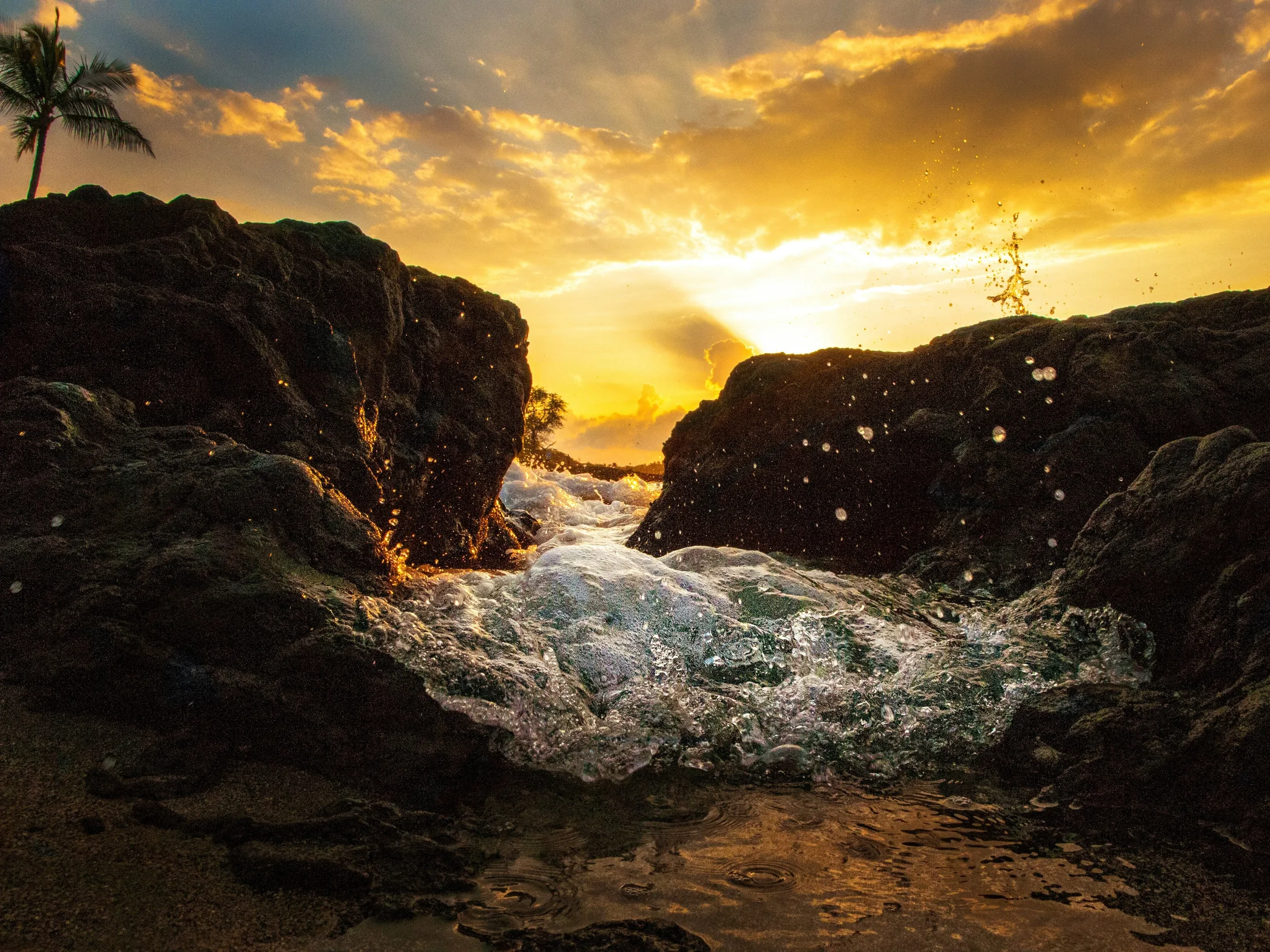


On Hawaiʻi Island, the photo is rarely the whole story.
A black sand beach may come with resting honu and tour-bus timing. A waterfall may be lovely but brief. A volcano viewpoint can feel profound even when the “lava photo” you saw online is no longer possible. This island rewards travelers who can separate the image from the experience: the drive, the weather, the access, the crowd pattern, and the quiet moments that never make it into a reel.
Here’s a grounded look at some of Hawaiʻi Island’s most photographed natural places — when they’re worth your vacation time, when to skip them, and where to aim instead if the famous version sounds like the wrong fit.
Hawaiʻi Volcanoes National Park: worth it, but not for the reason Instagram suggests
If one place on the island deserves its reputation, it’s Hawaiʻi Volcanoes National Park. The catch is that many visitors arrive chasing a specific image: red lava, a glowing crater, a dramatic plume. Volcanic activity changes. The park is extraordinary even when there is no visible eruption.
The better reason to go is scale. Kīlauea’s summit area, steam vents, crater views, lava fields, rainforest pockets, and older flows make the island’s geology feel immediate rather than abstract.
Worth it if: you can give it real time, dress for cooler and wetter conditions than the Kona coast, and accept that the day may not match the photo that sent you there.
Think twice if: you only have a rushed half-day from the west side and expect guaranteed lava.
A better angle: choose variety over one “perfect” viewpoint. A crater overlook, a short rainforest walk, and a lava field can be more satisfying than waiting in one crowded spot for the same shot as everyone else.
Punaluʻu Black Sand Beach: beautiful, easy, and often misunderstood
Punaluʻu reads instantly on camera: dark sand, palms, blue water, sometimes honu resting near shore. It is also one of the easier famous stops to fold into a south island day.
The beach is worth seeing, but it is not a conventional swim-and-lounge beach for every traveler. The appeal is the texture of the place: black sand underfoot, freshwater mixing near the shoreline, turtles hauled out in the sun, and a coastline that feels different from the white-sand resort beaches many visitors picture before arriving.
Worth it if: you are already routing through the south side and want a distinctive coastal stop.
Think twice if: your main goal is easy swimming, soft sand, and quiet. Punaluʻu can get busy.
A better angle: slow down. The photo takes ten seconds; the better memory is noticing how different this coast feels from the west side.
ʻAkaka Falls and Rainbow Falls: lush, easy, and best as part of a bigger day
ʻAkaka Falls gives a big waterfall payoff with relatively simple access. The paved loop, tropical vegetation, and tall cascade make it one of the easiest ways to experience the Hāmākua Coast’s wet, green personality without committing to a major hike.
Rainbow Falls in Hilo is even easier: close to town, quick to view, and especially photogenic when morning light hits the mist. It can also feel underwhelming if you build a whole day around it.
Worth it if: you are already exploring Hilo or the Hāmākua Coast and want beautiful, low-effort waterfall stops.
Think twice if: you are driving from Kona only for one waterfall. Hawaiʻi Island is large, and the drive is part of the calculation.
A better angle: treat the waterfalls as pieces of an east-side day. The coast, rain, small towns, gardens, and slower Hilo pace are what make these stops feel placed rather than simply collected.
Maunakea: unforgettable, but not casual
Few places on Hawaiʻi Island are as visually powerful as Maunakea. The summit landscape, altitude, clouds below, and night sky have made it one of the island’s most desired images. It is also one of the places where “can I get the shot?” is the wrong first question.
Maunakea is culturally significant and physically demanding because of the elevation. Access guidance can change, and rental-car restrictions may apply depending on the route and vehicle. Many visitors have a better experience when they separate “stargazing on Maunakea” from “driving to the summit.”
Worth it if: you are willing to plan carefully, understand altitude considerations, and approach the day with patience.
Think twice if: you are traveling with anyone sensitive to altitude or trying to squeeze it in after a full beach day.
A better angle: consider stargazing at lower elevation if the summit logistics feel like too much. The island’s dark skies do not begin and end at the top.
Waipiʻo and Pololū: valley views that may be enough
Waipiʻo has long been one of the island’s most photographed places: a deep green valley, cliffs, ocean, taro, and distant waterfall lines when conditions allow. The lookout offers a powerful view without entering the valley, and for many visitors, that is the right experience.
Access into and around Waipiʻo has been a sensitive and changing issue, with resident concerns, road conditions, and official restrictions shaping what is appropriate at any given time. Let the lookout be the plan unless current local guidance clearly says otherwise.
Pololū, at the end of the road in North Kohala, has a different kind of drama: a valley dropping sharply to a black-sand shoreline, with cliffs and green folds beyond. The overlook itself is rewarding. The walk down can be memorable for prepared visitors, but a short-looking hike can become more demanding than expected in heat, rain, mud, or crowded trail conditions.
Worth it if: you are already exploring the north or Hāmākua side and want a dramatic sense of the island’s valleys and coastline.
Think twice if: your plan depends on going down into Waipiʻo, or if you arrive at Pololū short on time, in beach sandals, or expecting solitude.
A better angle: spend more time with the region. The drive, old towns, dry-to-green transitions, and coastline are more satisfying than treating either valley as a single photo errand.
Papakōlea and South Point: striking, remote, and easy to misread
Papakōlea is one of the most visually unusual beaches in Hawaiʻi, known for its olive-green sand created by olivine crystals. That rarity is exactly why it is so heavily shared — and why the real visit deserves more thought.
This is not a quick roadside beach. Reaching it typically involves a long, exposed coastal walk in a remote area, with sun, wind, uneven ground, and limited services. If you go, go because you genuinely want the walk and the place, not because a color on your feed needs checking off.
Nearby Ka Lae, commonly called South Point, gets photographed for its open-ocean edge, wind-bent feeling, and “southernmost point” appeal. It also attracts cliff-jump imagery, which can make the place look like a natural amusement park. It is not. The better visit is to take in the exposure, the color of the water, the fishing platforms, and the sense of being at an edge of the island.
Worth it if: you are comfortable with remote-feeling coastal landscapes and are already exploring the south.
Think twice if: you dislike long exposed walks, are packing too much into the day, or are mainly interested in recreating a cliff-jump video.
A better angle: if you want a distinctive south-side coastal experience with less commitment, Punaluʻu is usually the easier choice. If you do include South Point, give the day room to breathe.
Kealakekua Bay: famous for good reasons, but access matters
Kealakekua Bay is one of the island’s most photographed ocean places, especially for clear water, snorkeling, and the Captain Cook monument area. It is beautiful, historically important, and not as simple as “drive up and jump in wherever.”
Access varies by approach, and the bay’s popularity means the quality of the experience depends heavily on how you go. For many visitors, joining a permitted, well-run ocean outing is more practical than trying to improvise.
Worth it if: snorkeling is a priority and you are willing to plan the access rather than wing it.
Think twice if: you want a spontaneous beach stop with easy parking, shade, bathrooms, and a low-effort entry.
A better angle: if your group wants simpler snorkeling logistics, look at west-side beach parks and protected coves that match your comfort level. Kealakekua is special, but “special” and “simple” are not the same thing.
So, which famous places are actually worth it?
For most travelers, the strongest “yes” spots are Hawaiʻi Volcanoes National Park, Punaluʻu if you are on the south route, ʻAkaka Falls when paired with Hilo or Hāmākua, and one north-side valley overlook if it fits your itinerary.
The more conditional choices are Maunakea, Papakōlea, Pololū’s hike, South Point, and Kealakekua Bay. They can be excellent, but they ask for more: better timing, better planning, stronger physical comfort, or a clearer reason to go.
The mistake is not visiting famous places. Famous places are often famous because they are genuinely remarkable. The mistake is letting the photo make the decision for you.
On Hawaiʻi Island, the best days usually have enough space in them: space for weather to change, for drives to take longer than expected, for a roadside view to become the thing you remember most. Choose fewer stops. Give them more attention. The island is not short on beauty. It is only short on travelers who leave enough room to notice it.

Further Reading
A few relevant next steps from Alakai Aloha.
 BlogQuiet Big Island Hikes and Wild Beaches
Find quieter Big Island hikes and secluded shorelines, with practical tips for lava terrain, rough roads, ocean safety, and respectful exploring.
Editor's pick GuideBest Volcano Lodging Near Hawaiʻi Volcanoes NP
A guide to best Volcano lodging.
Editor's pick ActivityHawaiʻi Volcanoes National Park
Hawaiʻi Volcanoes National Park is a UNESCO World Heritage Site offering unparalleled opportunities to explore active volcanic landscapes, diverse ecosystems, and ancient Hawaiian culture, providing a profound connection to Earth's powerful forces.
Editor's pick Activity‘Akaka Falls
Explore 'Akaka Falls State Park's lush rainforest, featuring a paved loop trail to viewpoints of the stunning 442-foot 'Akaka Falls and the 100-foot Kahūnā Falls.
Editor's pick