

Hawaiʻi Island rewards travelers who choose their base honestly. The island is large, the landscapes are spread out, and “we’ll just drive over there after breakfast” can become a full-day commitment.
That is part of the appeal. In one trip you can wake up on a dry lava coast, eat lunch in a cool ranch town, walk through rainforest, and end the day near a volcanic landscape. But the best place to stay depends less on a universal “best region” and more on what you want your days to feel like.
For many visitors, the right answer is a split stay: a few nights on the sunny west side for beaches and ocean time, then a night or two near Volcano or Hilo for the east side and Hawaiʻi Volcanoes National Park. If you prefer to unpack once, choose carefully. Hawaiʻi Island is not as forgiving as smaller islands when it comes to long day trips.
The short version: which Big Island region fits you?
If you want the easiest first trip, with restaurants, tours, sunsets, and a practical base, stay on the Kona Coast, especially around Kailua-Kona.
If you want polished resort comfort, drier weather, golf, pools, and easy vacation mode, look at the Kohala Coast.
If you want a quieter west-side stay with coffee country, snorkeling days, and a slower rhythm, consider South Kona.
If you care most about waterfalls, gardens, rainforest, local town life, and easier access to the east side, stay in Hilo or along the Hāmākua Coast.
If Hawaiʻi Volcanoes National Park is central to your trip, spend at least one night in Volcano Village.
If you like cool air, open pastures, and a strategic inland base, Waimea can make sense, especially for returning visitors who do not need to be on the beach.
Kona Coast: the most practical west-side base
For a first visit, the Kona Coast is often the easiest choice. Kailua-Kona gives you the island’s most concentrated mix of restaurants, shops, boat tours, condos, hotels, and evening activity. It is close to the main west-side airport and keeps you near classic west-side experiences: snorkeling trips, manta ray night tours, coffee country drives, lava-rock coastlines, and sunset dinners.
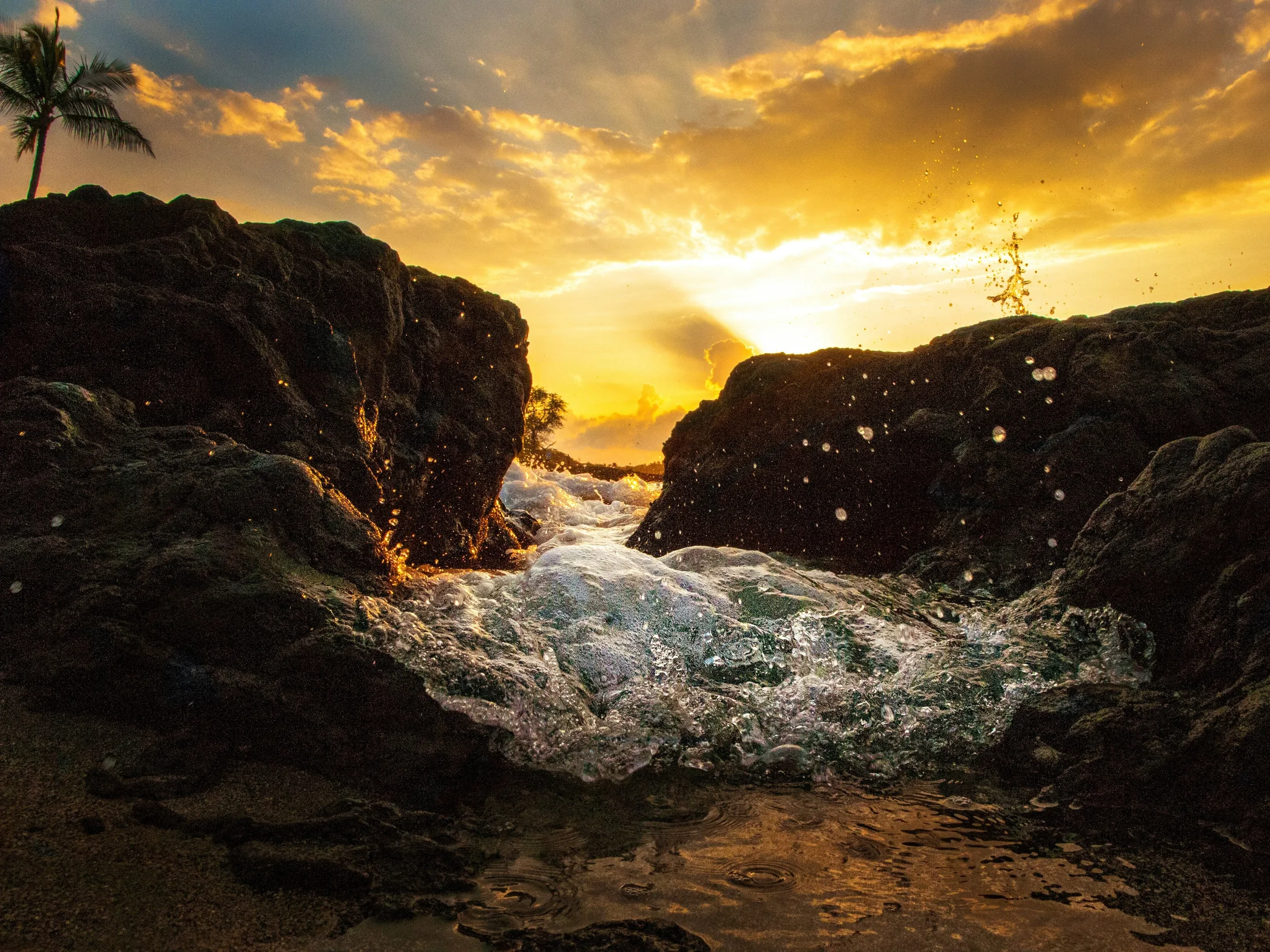
The Kona Coast is not one single mood. Around Kailua-Kona, the feel is active and convenient. Farther south, the pace softens into coffee farms, small towns, and residential pockets. Farther north, the coast becomes more resort-oriented as you approach Kohala.
Stay here if you want flexibility. You can spend one day on the water, another visiting coffee farms and historic sites in South Kona, another driving north toward Kohala beaches, and another staying close to your lodging. For travelers who like to decide over breakfast instead of scheduling every hour, Kona is forgiving.
The tradeoff is that Kona can feel busy by Hawaiʻi Island standards. It is also not a “long sandy beach outside every hotel” destination. Much of the coastline is lava rock, with pockets of beach and clear water rather than endless sand. If your dream is a resort bubble with a broad beach, Kohala may be a better fit. If your dream is rainforest and waterfalls outside your window, look east.
Kohala Coast: sunny resort ease
The Kohala Coast is the island’s cleanest answer for travelers who want a true resort vacation. This is the dry, sunny northwest side, with master-planned resort areas, golf courses, manicured grounds, beach paths, and large properties designed for guests who want the pool, beach, spa, and dinner plans all within easy reach.
It is especially strong for families who want convenience, couples who want a calm resort setting, and travelers who prefer their lodging to be part of the experience rather than just a place to sleep. If you are coming to rest, read, swim when conditions are friendly, and enjoy the comforts of a larger property, Kohala makes sense.
The region’s strength is also its limitation. Kohala is not the best base if you want to wander into a lively local town. Dining can be excellent, but it is often tied to resort areas or requires driving. You are also farther from the east side, so Hilo, waterfalls, and Volcano become long outing days rather than casual half-day plans.
South Kona: coffee country, snorkeling, and a quieter west side
South Kona suits travelers who like a little distance from the busiest resort corridors. The area around Captain Cook, Kealakekua, and Hōnaunau has a different feel from Kailua-Kona: greener slopes, coffee farms, small roads, ocean views from elevation, and quieter evenings.
This can be a lovely base if snorkeling, coffee farms, and a slower west-side trip are high priorities. It also works well for travelers who prefer smaller inns, vacation rentals, or B&B-style stays over large resorts. You are still on the west side, but not in the middle of the main visitor flow.
The tradeoff is convenience. Roads can be slower, restaurants and services are more spread out, and you will drive more for certain beaches and resort-area amenities. South Kona is best when you want its specific character, not when you are trying to split the difference between every region on the island.
Hilo and the Hāmākua Coast: green, local, and closer to the east side
Hilo is the island’s rainy, green counterpoint to the west side. It is not trying to be Kona, and that is exactly why many travelers like it. The town has a lived-in feel, with markets, old storefronts, banyan trees, rain showers, gardens, and easy access to the lush east side.
Stay in Hilo if your priorities include waterfalls, botanical gardens, scenic drives along the Hāmākua Coast, and a more convenient route to Hawaiʻi Volcanoes National Park than you would have from the west side. It is also a good base for travelers who are less focused on resort beaches and more interested in the island’s wetter, softer, more residential side.
The Hāmākua Coast north of Hilo adds dramatic coastal roads, gulches, old plantation landscapes, and a quieter rural feel. Lodging is more scattered, so this region is better for travelers who enjoy a less packaged stay and do not need a dense restaurant scene at night.
The main thing to understand is weather and beach style. Hilo is wetter than the leeward west side. That rain is what makes the region so green, but this is not the place to book if your top priority is sunny pool-and-beach time.
Volcano Village: the best base for Hawaiʻi Volcanoes National Park
Volcano Village is a small, cool, forested community near Hawaiʻi Volcanoes National Park. It feels nothing like the coast, and that is the point. Nights can be cool, mornings can be misty, and the landscape has a quiet, tucked-away quality that makes a park-focused stay feel much more relaxed.
If the national park is a major reason for your trip, staying here changes the experience. Instead of driving across the island, trying to see everything in one push, and then driving back tired, you can give the area time. You can visit the park in different light, return to your lodging for a break, and let the weather move through without feeling like the whole day depends on one window.
Volcano is not for everyone. Dining is limited compared with Kona or Hilo, evenings are quiet, and you are not near the beach. But for one or two nights, it can be one of the smartest lodging decisions on the island. Pack a light layer; the elevation is noticeably cooler than the coast, especially after sunset.
Waimea: cool uplands and a strategic inland base
Waimea sits in the island’s uplands, between the sunny Kohala side and the green Hāmākua side. It has ranch-country character, cooler temperatures, and a practical location for travelers who want access to both north Kohala and the east-facing coast without staying directly on the beach.
This is not the obvious choice for a classic first-time Hawaiʻi vacation, and that is fine. Waimea is better for travelers who have a car, like cooler evenings, and appreciate being in a real town rather than a resort zone. It can work well for repeat visitors, hikers, food-focused travelers, or anyone planning days that reach north, east, and west rather than staying planted by the pool.
The tradeoff is simple: you are inland. If you want to walk from your room to the sand, Waimea will frustrate you. If you like waking up in cooler air and driving out to different parts of the island each day, it may fit beautifully.
What about Puna?
Puna, southeast of Hilo, has lava landscapes, rainforest pockets, coastal roads, and a strong sense of place. It is also not the easiest default base for most first-time visitors. Lodging is more spread out, services vary by area, and it puts you farther from many west-side beaches and resort comforts.
Choose Puna because you specifically want that side of the island — not because it looks like a cheap or clever compromise on a map. For a first trip built around broad exploration, Hilo is usually the more practical east-side base.
The smartest Big Island plan: split your stay
If your trip is a week or longer, a split stay is often worth it. Hawaiʻi Island is large enough that changing hotels can save you from repeating long drives and let each region be itself.
A classic first-trip combination is Kona or Kohala plus Volcano. Use the west side for ocean time, sunsets, restaurants, and tours. Use Volcano for the national park and cooler forested landscapes.
If you want more east-side town life, choose Kona or Kohala plus Hilo. This gives you a stronger base for waterfalls, gardens, and the Hāmākua Coast, with Volcano still much closer than it would be from the west side.
If you strongly dislike changing lodging, stay west — Kona for convenience, Kohala for resort ease — and accept that the east side will be a longer day. That can still be a great trip. It just helps to know what you are choosing.
How to make the final call
Choose Kona if you want the most practical all-around base.
Choose Kohala if you want the smoothest resort vacation.
Choose South Kona if you want a quieter west side with coffee country and snorkeling nearby.
Choose Hilo if you want greenery, waterfalls, town life, and better access to the east.
Choose Volcano if the national park deserves more than a rushed day trip.
Choose Waimea if you like cooler uplands and do not need to sleep by the ocean.
The Big Island is not a place to “cover” efficiently. It is better when you let the regions stay distinct: dry coast, wet coast, high pasture, rainforest, lava, reef, town, and quiet. Pick the base that matches the kind of days you actually want, and the island starts to feel less like a logistical puzzle and more like a trip with a natural rhythm.

Further Reading
A few relevant next steps from Alakai Aloha.
 BlogKona vs. Hilo: Where Should You Stay?
Most Hawaiʻi Island lodging decisions come down to one question: do you want the dry, beach-oriented west side, or the greener, rainier east side?
Editor's pick GuideBest Hotels & Resorts on Hawaiʻi Island
A guide to Big Island hotels.
Editor's pick ActivityHawaiʻi Volcanoes National Park
Hawaiʻi Volcanoes National Park is a UNESCO World Heritage Site offering unparalleled opportunities to explore active volcanic landscapes, diverse ecosystems, and ancient Hawaiian culture, providing a profound connection to Earth's powerful forces.
Editor's pick BlogA Smarter Rainy-Day Plan for the Big Island
Learn how to pivot your Big Island plans when rain rolls in, from Kona and Hilo to Volcano, Waimea, and the Kohala Coast.
Editor's pick