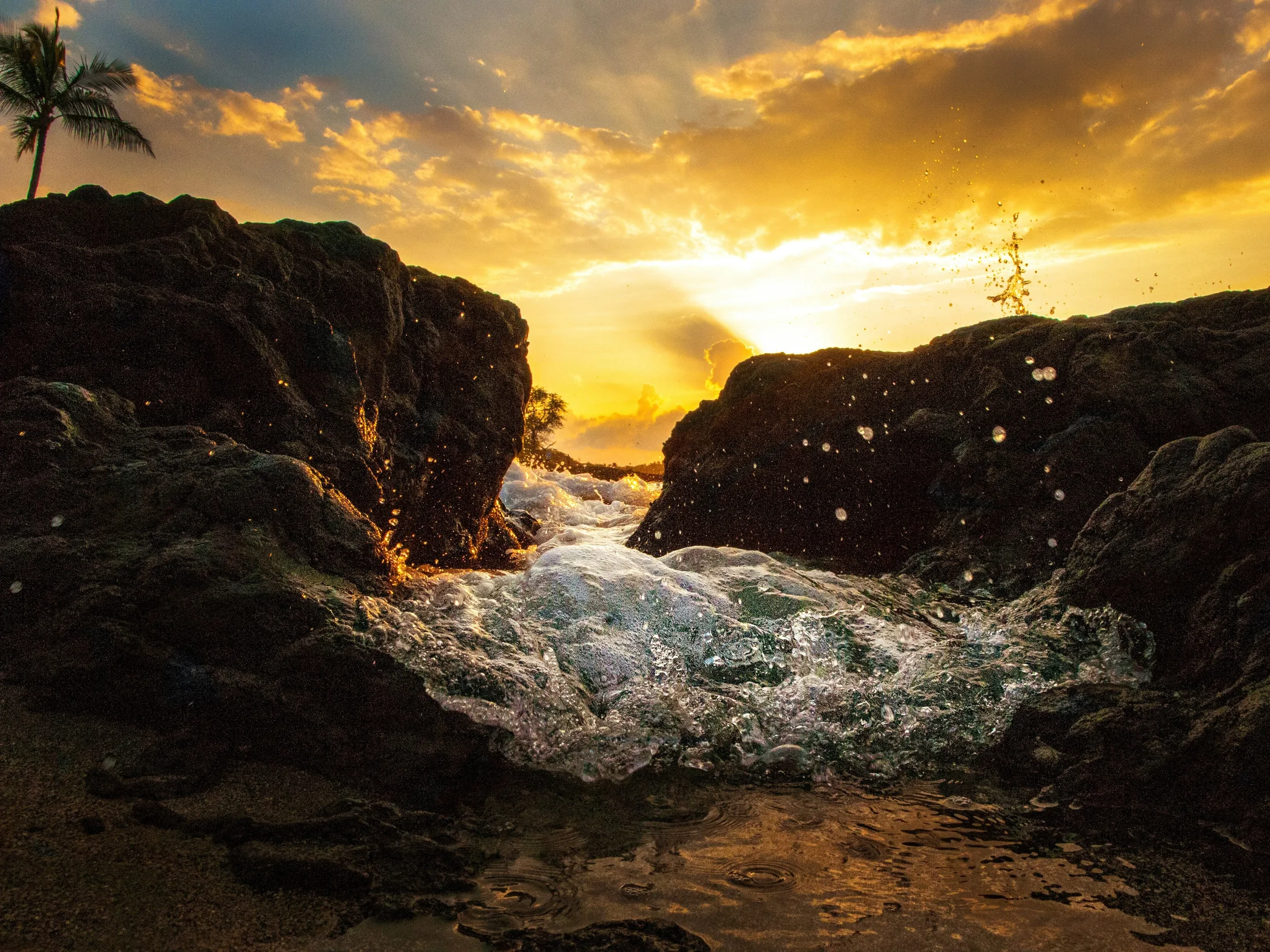


On Hawaiʻi Island, moʻolelo are not decoration layered over the landscape. They are part of how the island is known.
A lava field is not only a lava field. A crater is not only geology. A puʻu, a coastline, a grove of ʻōhiʻa, a cold high slope under cloud — each may carry names, genealogies, chants, warnings, jokes, rivalries, and grief. Some stories are widely published. Others belong to families, hālau, communities, or particular places and are not for casual retelling.
That is the first useful shift for a visitor: “legend” can make a story sound like fantasy. Moʻolelo is larger than that. It can mean story, history, account, succession, a way of remembering. On Hawaiʻi Island, moʻolelo often sits right beside visible landform. You can stand at Kīlauea and understand why people speak of Pelehonuamea not as a distant mythic figure, but as a presence tied to heat, creation, destruction, renewal, and home.
The point is not to memorize a list before your trip. The better approach is to learn enough that the island stops feeling like scenery and starts feeling particular.
Pele, Kīlauea, and the living landscape
Most visitors first encounter Hawaiʻi Island moʻolelo through Pele, the volcanic deity whose traditions are strongly associated with Kīlauea. In many tellings, Pele travels through the islands before making her home at Kīlauea, where volcanic activity is understood not only as a natural process but as part of a larger sacred and ancestral landscape.
Careful language matters. It is easy to flatten Pele into a “volcano goddess” postcard. The fuller traditions are far more complex: Pele appears in chants, genealogies, hula, migration stories, family stories, and accounts of specific eruptions and places. She can be creative and destructive, generous and fierce, intimate and beyond human control. Different families and cultural lineages may tell different versions, and those differences are not a problem to solve. They are part of the life of oral tradition.
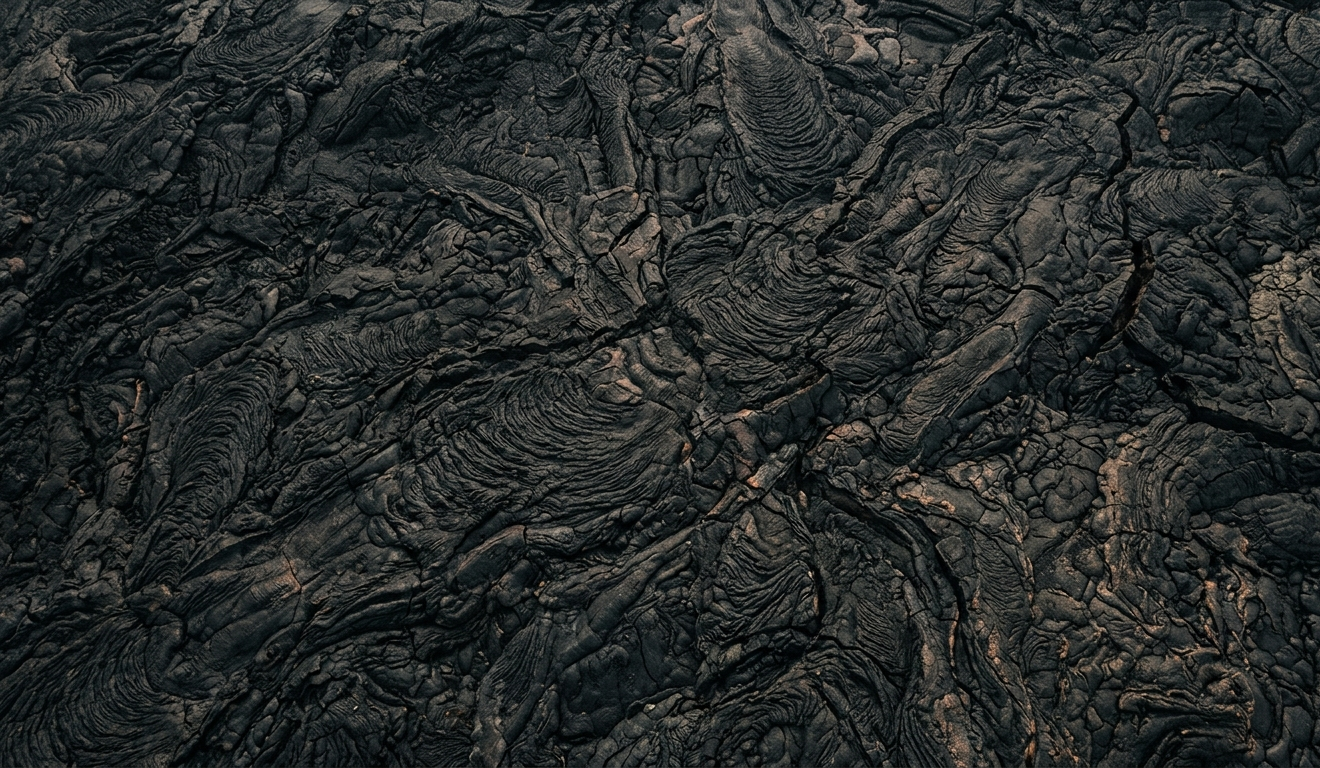
If you visit Hawaiʻi Volcanoes National Park, give yourself time for more than the overlook. The summit area of Kīlauea, the lava fields, steam vents, forest edges, and old flows all help a visitor feel the scale of the stories. Interpretive exhibits and ranger or cultural programs, when available, can add context. But even without a formal talk, the place asks for a slower pace. Read names carefully. Notice how quickly new land and old forest can meet. Notice how recent lava can look lifeless from a distance, then reveal texture, color, cracks, and the first signs of return.
You may also hear about the custom of not taking lava rocks. Some versions are framed as “Pele’s curse,” which has become a tourist story of its own. You do not need to dramatize it. The clean practice is simple: leave stones, sand, plants, and cultural materials where they are.
Hiʻiaka, ʻōhiʻa lehua, and stories of attachment
Pele is rarely alone in the traditions that surround her. Her sister Hiʻiaka is one of the most important figures connected to Pele moʻolelo, hula, healing, forests, and journeys across the islands. Stories of Hiʻiaka are expansive, with episodes tied to love, loyalty, rivalry, restoration, and the power of chant.
On Hawaiʻi Island, these stories can shift the way you see the forest. The ʻōhiʻa lehua tree, with its red lehua blossoms, is often linked in popular storytelling to Pele, Hiʻiaka, and themes of love and transformation. You will see ʻōhiʻa in wet upland forests, along volcanic landscapes, and in places where native ecosystems are still holding on. The tree is not just “pretty.” It is a foundation species in Hawaiian forests and a recurring presence in cultural imagination.
A visitor does not need to retell every version of the ʻōhiʻa and lehua story to appreciate it. Learn from sources grounded in Hawaiʻi, remember that simplified versions may leave much out, and let the story deepen your attention rather than turn the plant into a souvenir concept.
That same restraint applies to hula. Many Pele and Hiʻiaka traditions are carried through hula and oli, not just prose summaries. If you attend a serious cultural performance or educational program, listen for how place names, movement, and chant hold the story together. Hula is not merely an illustration of moʻolelo; in many cases, it is one of the ways moʻolelo lives.
Poliʻahu, Mauna Kea, and the cold realm above the clouds
Hawaiʻi Island is also the island of Mauna Kea, whose summit and upper slopes carry deep cultural significance. Traditions associated with Poliʻahu, a deity of snow, cold, and the high mountain, are often told in relation to Mauna Kea. In some moʻolelo, Poliʻahu and Pele appear in contrast: snow and fire, high mountain and volcanic heat, restraint and force.
For travelers, Mauna Kea can be tempting to treat as a scenic achievement — a summit drive, a sunset photo, a stargazing plan. Moʻolelo asks for a wider view. The mountain is not simply “up there.” It is part of the island’s water, weather, genealogy, ceremony, navigation, and contemporary cultural life. It is also a place where modern astronomy, Native Hawaiian advocacy, land management, and spiritual significance meet in complicated ways.
You do not have to understand every layer to visit with care. Start by recognizing that the mountain is not an empty backdrop. If you join an educational program, choose one that treats Hawaiian perspectives as central, not as a short preface before the telescope talk.
Kamapuaʻa, Puna, and the unruly edge of stories
Not all moʻolelo are solemn in the way visitors expect. Some are funny, earthy, sharp, full of appetite and argument. Kamapuaʻa, often described as a pig demigod with shape-shifting qualities, appears in traditions connected to rain, fertility, desire, and conflict. His encounters with Pele are among the better-known story cycles, and in some tellings they help explain contrasting landscapes of lava, rain, growth, and steam.
These stories matter partly because they resist the tidy version of Hawaiian culture often packaged for visitors. They are not all serene. They can be bawdy, strategic, emotional, and strange. They carry environmental knowledge, social observation, and spiritual meaning, but they also have personality. A good storyteller can make a moʻolelo feel alive because it was never meant to be a museum label.
Puna, with its lava-shaped terrain, wet forests, coastal edges, and communities that have lived with eruption and change, is one area where visitors may feel how immediate Hawaiʻi Island’s creation stories can be. The land is young in places. Roads, neighborhoods, forests, and shorelines have all been altered by lava within living memory. Moʻolelo here does not feel remote. It sits close to daily life.
Where to learn without turning stories into a checklist
The best places to learn moʻolelo on Hawaiʻi Island are usually places that add context rather than just point at a rock and give you a simplified tale.
Hawaiʻi Volcanoes National Park is an obvious starting point for Pele-related interpretation, volcanic landscapes, and the relationship between geology and culture. Puʻuhonua o Hōnaunau National Historical Park can help visitors understand chiefly systems, refuge, sacred space, and the seriousness of place-based history in Kona. Kaloko-Honokōhau National Historical Park offers context for fishponds, coastal life, and Hawaiian land use. In Hilo, institutions such as the Lyman Museum and ʻImiloa Astronomy Center can help frame natural history, Hawaiian knowledge, language, astronomy, and island identity in a more grounded way than a quick roadside stop can.
Programs and exhibits change, so treat those places as starting points rather than fixed promises. Look for talks, guided walks, cultural demonstrations, hula events, and book selections by Hawaiian scholars, kumu, cultural practitioners, and local historians. A small bookstore shelf chosen with care can sometimes teach more than a dozen search results.
If you hear a story from a guide, musician, cultural practitioner, or kūpuna, receive it as a gift of that moment. Sharing that you learned something is different from presenting yourself as an authority on it.
A better way to carry the stories
A traveler does not need to be silent, nervous, or overly formal. Curiosity is welcome when it is paired with humility.
Use the Hawaiian place name when you know it, and take time with pronunciation. Notice when a story is being told as “one version,” not “the official version.” Let public interpretation guide what you repeat, and remember that many culturally important places are not meant to be entered or used as backdrops.
The reward is not that you become an expert after one trip. The reward is that Hawaiʻi Island becomes more legible. Kīlauea is no longer just an eruption site. Mauna Kea is no longer just a summit. An ʻōhiʻa blossom is no longer just a red flower on a trail. Place names start to sound like invitations to pay attention.
Moʻolelo does not make the island smaller by explaining it. It makes the island larger. It reminds you that what you see from the road, the trail, the overlook, or the shoreline is only one layer of a place that has been spoken, sung, named, argued over, loved, and remembered for generations. For a visitor, that is more than enough to begin with.
Further Reading
A few relevant next steps from Alakai Aloha.
 BlogRespectful Heiau and Hula on Hawaiʻi Island
Slow down with a guide to visiting Hawaiʻi Island heiau and experiencing hula with cultural context, care, and respect.
Editor's pick GuideBest Cultural Sites on Hawaiʻi Island
A guide to cultural sites Hawaiʻi Island.
Editor's pick ActivityHawaiʻi Volcanoes National Park
Hawaiʻi Volcanoes National Park is a UNESCO World Heritage Site offering unparalleled opportunities to explore active volcanic landscapes, diverse ecosystems, and ancient Hawaiian culture, providing a profound connection to Earth's powerful forces.
Editor's pick ActivityLyman Museum
Explore the Lyman Museum in Hilo to discover the Big Island's natural history, from volcanic origins to diverse ecosystems, alongside a rich journey through Hawaiian culture and missionary history.
Editor's pick