

Hawaiʻi Island asks you to slow down. Not because it is sleepy—it is enormous, geologically young, and full of weather, distance, lava, ranchland, rain forest, and coastline—but because the cultural places here do not reveal themselves at windshield speed.
Heiau and hula are two of the best ways to feel that depth. A heiau may look, at first, like a stone platform or walled enclosure. Hula may appear, at first, as a performance on a stage. Both are much more than that. Heiau are sacred places tied to ceremony, governance, agriculture, healing, navigation, chiefly authority, and relationships between people, gods, and land. Hula is a disciplined art of story, genealogy, language, poetry, music, memory, and place.
You do not need to become an expert before you visit. But a little context changes everything, especially on Hawaiʻi Island, where many places connected to heiau and hula are also connected to Kamehameha I, aliʻi leadership, ocean travel, fishing, refuge, and the continuing cultural life of Hilo, Kona, Kohala, and Kaʻū.
Start with the right expectation
A meaningful cultural day on Hawaiʻi Island is not about collecting sites. Choose one or two places and give them your attention.
Some heiau are preserved inside national park sites with signs, trails, and staff interpretation. Others are visible from public areas but not meant to be entered. A few sit in remote landscapes where the road, weather, or access can be more complicated than they look on a map. Hula, likewise, ranges from resort performances to serious hālau presentations and festival stages where dancers have trained for years under a kumu hula.
Heiau on Hawaiʻi Island: where to go and what you’re seeing
Puʻuhonua o Hōnaunau National Historical Park
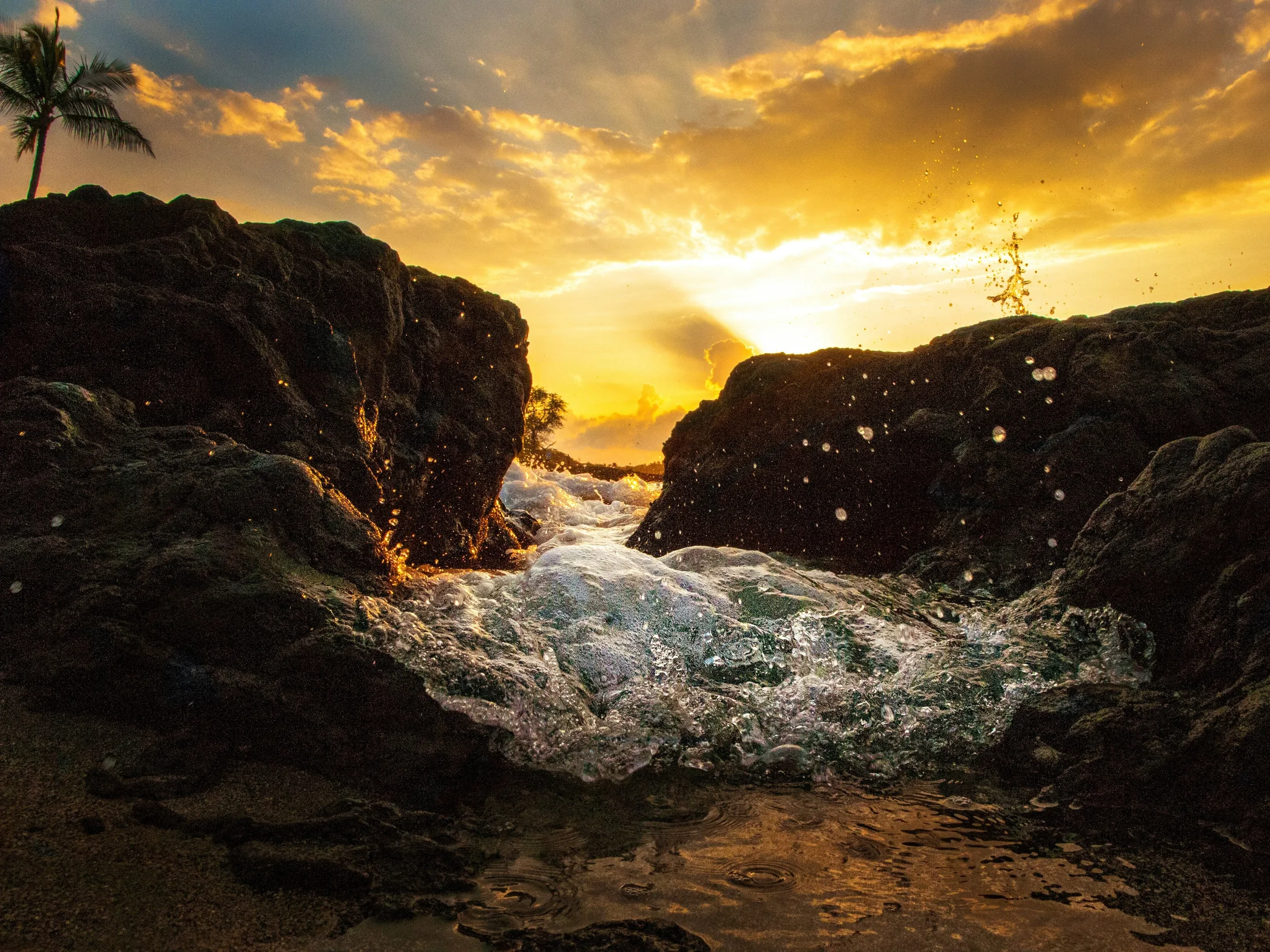
For many visitors, Puʻuhonua o Hōnaunau is the clearest introduction to sacred and chiefly landscapes on the Kona side. The park protects a place of refuge, royal grounds, coastal structures, and temple-related features in a setting where black lava, pale walls, coconut palms, and the ocean sit close together.
This is a good choice if you want interpretation without guesswork. Paths and signs help you understand what you are looking at, and the landscape carries a feeling of order: walls, platforms, shoreline, canoe landing, and ceremonial space all in relationship to each other.
It is also a useful reminder that “heiau” is not one simple category. Sacred sites had different purposes. Some were connected to healing, fishing, agriculture, or chiefly ritual; others carried a different level of kapu. At Puʻuhonua o Hōnaunau, the visitor experience is not just “old stones by the sea.” It is a way to understand how law, spirituality, rank, refuge, and place were woven together.
Puʻukoholā Heiau National Historic Site
On the Kohala Coast, Puʻukoholā Heiau has a different gravity. The massive stone platform is closely associated with Kamehameha I and the political and spiritual world that preceded the unification of the Hawaiian Islands.
The site is usually approached through a park setting, which makes it easier to visit with care. You can see the heiau from designated areas and take in its scale against the dry Kohala landscape. The feeling is spare and exposed: stone, grass, wind, ocean, and history.
For travelers staying along the Kohala Coast, this is one of the most practical and meaningful heiau visits on the island. It pairs well with a slower day in North Hawaiʻi rather than being squeezed between beach plans and dinner reservations.
Ahuʻena Heiau at Kamakahonu, Kailua-Kona
In Kailua-Kona, Ahuʻena Heiau sits in a place many visitors pass without fully registering it. The area around Kamakahonu was important in the later life of Kamehameha I, and the reconstructed heiau is visible near the heart of town.
This is not a “wander through the ruins” experience. It is best appreciated from appropriate public viewing areas. Its location is part of the lesson: Hawaiian history is not only out in remote valleys or behind park gates. It is in the middle of modern Kona, beside hotels, boats, swimmers, restaurants, and traffic.
If you are staying in Kailua-Kona, take a few quiet minutes here early in the day before the waterfront gets busy. Then continue with a different awareness of the town around you.
Kaloko-Honokōhau National Historical Park
North of Kailua-Kona, Kaloko-Honokōhau protects a coastal cultural landscape: fishponds, trails, petroglyph areas, house sites, and sacred features connected to life in a dry Kona environment.
This is not only a heiau stop, and that is exactly why it matters. It helps visitors see how sacred places belonged to a larger system of settlement, food production, fishing, water, and movement across land divisions from mountain to sea. On Hawaiʻi Island, cultural understanding often comes from seeing patterns rather than isolated monuments.
Moʻokini Heiau and North Kohala
Moʻokini Heiau, in North Kohala, is one of the island’s most storied sacred sites. It sits in a remote, windswept part of the island, away from the easier rhythm of resort Hawaiʻi.
This is where judgment matters. Roads and access conditions can vary, and the area is not a casual add-on if you are short on time or driving a rental vehicle unsuited to rough conditions. If you go, make it the focus of that part of the day, not something that looked close enough on a map.
North Kohala rewards that kind of attention. The landscape is tied to Kamehameha I, old trails, wind, pasture, coastline, and stories that feel different from Kona or Hilo.
Hikiau Heiau at Kealakekua Bay
Kealakekua Bay is often discussed for snorkeling and ocean tours, but the shoreline also holds significant cultural history. Hikiau Heiau, near Nāpōʻopoʻo, is one of the places that reminds visitors that this bay is not just a recreation setting.
Because the area is popular, it is worth arriving with a calmer frame of mind. If you pause before rushing toward the water and notice the bay, cliffs, settlement history, and heiau, you will understand the place differently.
Visiting heiau with care
The practical version is short: stay on paths and outside walls or platforms unless signs clearly invite entry. Do not climb on stones, move rocks, take anything, or leave offerings. If cultural practitioners are present, give them space. If a site is closed, gated, or marked kapu, treat that as the end of the path.
Heiau are not props. They are places with continuing meaning.
Hula on Hawaiʻi Island: where to experience it
Hawaiʻi Island has one of the most important hula landscapes in the world because of Hilo and the Merrie Monarch Festival. But you do not need a festival ticket to experience hula thoughtfully.
Hilo and the Merrie Monarch lens
Merrie Monarch, held in Hilo, is the hula event most visitors have heard of for good reason. It brings together hālau from across Hawaiʻi and beyond, with performances that reflect deep training, lineage, language, chant, costuming, and interpretation. Even if you never attend in person, knowing that Hilo hosts this level of hula changes how you see the island.
If your trip overlaps with Merrie Monarch season, plan early and be flexible. Hilo becomes busy, accommodations tighten, and many events have their own traditions and demand. If you are not attending the competition itself, you may still feel the energy around town through craft fairs, exhibitions, and community gatherings associated with the season.
Outside festival time, Hilo remains a strong place to seek cultural programming because it is a local town first, not a resort corridor first. Look for museums, cultural centers, university or community events, and performances that foreground Hawaiian language and hālau practice rather than only visitor entertainment.
Kona and Kohala resort performances
On the Kona and Kohala coasts, hula is most accessible to many travelers through lūʻau, resort shows, and cultural programming. These can vary widely. Some are polished visitor productions with dinner, fire knife dancing, and a broad Polynesian revue. Others include more careful Hawaiian storytelling, chant, and hula tied to place.
There is nothing wrong with enjoying a lūʻau on vacation. The key is to know what you are choosing. If you want a relaxed evening with food and entertainment, choose that honestly. If you want a deeper hula experience, look for programs that name the kumu, hālau, cultural practitioners, or specific traditions being shared.
A good performance does not need to feel academic. It should feel grounded.
National parks, museums, and cultural programs
Hawaiʻi Island’s park and museum settings sometimes offer demonstrations, talks, music, hula, or practitioner-led programs. These are often among the best ways to learn because the performance or presentation is connected to interpretation rather than treated as background ambience.
Because schedules change, treat these as opportunities to check during trip planning rather than fixed promises. If something lines up with your dates, build around it. A short, well-led program can stay with you longer than a crowded evening show.
How to recognize a thoughtful hula experience
Hula ʻauana and hula kahiko are often described as modern and traditional forms, but that shorthand can be too simple. Both can carry skill, discipline, and meaning. What matters is whether the presentation treats hula as an art with lineage rather than decoration.
Listen for Hawaiian language. Notice whether the host explains the mele, place names, instruments, or story behind the dance. Pay attention to whether dancers are introduced with respect. A thoughtful show helps you understand what you are seeing without flattening it into a tourist sample.
And when the performance begins, put the phone down for at least one dance. Not because photography is always forbidden, but because hula deserves to be received with your full attention.
A few good cultural day pairings
If you are based in Kona, pair Puʻuhonua o Hōnaunau with a South Kona day and leave time for the shoreline and coffee country. In the evening, choose a Kona-area lūʻau or cultural program if you want the day to end with hula.
If you are staying on the Kohala Coast, make Puʻukoholā Heiau the anchor. Add North Kohala only if you have the time and road conditions make sense. This is a day for open landscapes, not a packed itinerary.
If you are in Hilo during Merrie Monarch season, let hula lead the trip. Keep your daytime plans lighter than usual. Hilo rain, festival traffic, and late nights do not pair well with overplanning.
What you take with you
The most memorable cultural experiences on Hawaiʻi Island are rarely the loudest ones. They may be a line of stone above the Kohala coast, a chant before a hula kahiko performance, a sign that helps you understand a place of refuge, or the realization that modern Kailua-Kona is layered over royal history.
Heiau and hula are not separate from the island’s beaches, lava fields, towns, and roads. They are part of the same story: people knowing where they are, remembering who came before them, and carrying meaning forward through place, language, movement, and care.
Approach them that way, and Hawaiʻi Island becomes less like a destination you are touring and more like a place you are being allowed to meet.
Further Reading
A few relevant next steps from Alakai Aloha.
 BlogMaunakea Stargazing, Culture, and Safety
Plan a thoughtful Maunakea stargazing night with cultural context, altitude and road safety tips, and guidance on whether the summit is right for you.
Editor's pick GuideBest Cultural Sites on Hawaiʻi Island
A guide to cultural sites Hawaiʻi Island.
Editor's pick ActivityHikiau Heiau
Explore Hikiau Heiau, an ancient luakini (temple) at Napo'opo'o Beach, offering profound historical and cultural insights into early Hawaiian practices and Captain Cook's arrival.
Editor's pick ActivityPuʻukoholā Heiau National Historic Site
Puʻukoholā Heiau National Historic Site preserves an ancient Hawaiian temple built by King Kamehameha the Great, offering a profound glimpse into island unification and warrior culture.
Editor's pick